How to Reduce Email Bounce Rate: A Sequenced Fix for 2026
A good email bounce rate stays under 2%, and anything past 5% counts as high risk, per monday.com's 2026 benchmarks. The fastest way down from a high rate is not a longer checklist: suppress every hard bounce today, run the full list through email verification this week, and fix SPF, DKIM, and DMARC records this month, in that order. Each step recovers reputation faster than the one after it, so working out of sequence wastes the early wins the later fixes depend on.
What is a good email bounce rate (and is 42% high)
A good email bounce rate sits under 2%, per monday.com's 2026 benchmarks: 2%-5% is acceptable, and anything over 5% is high risk. Say your list is bouncing at 42%: that's not a marginal problem, it's roughly eight times monday.com's high-risk threshold, and it points to a broken list or a sending domain that mailbox providers have effectively stopped trusting.
Benchmarks vary by industry:
| Industry | Typical bounce rate |
|---|---|
| Technology | 0.5%-1.2% |
| B2B services | 0.5%-1.5% |
| Healthcare | 1%-2% |
| E-commerce | 1%-2.5% |
| Nonprofits | 2%-5% |
cloud.gov, the US government's cloud platform, warns senders once bounce rate crosses 2% and disables sending outright at 4%. That threshold is a useful proxy for how mailbox providers behave more broadly, even outside government infrastructure.
Hard bounces vs. soft bounces: why the difference changes what you fix first
A hard bounce is permanent: the address doesn't exist, or the domain is dead, so it should never be resent to. A soft bounce is temporary, a full mailbox or a brief server outage, and most platforms retry delivery three to five times over about 72 hours before giving up. Treating both the same way is what causes teams to fix the wrong thing first.
Hard bounces are a data problem you can resolve in minutes, since removing them requires no diagnosis, just deletion, and both Brevo and Campaign Monitor recommend suppressing them immediately rather than waiting for a monthly cleanup. Soft bounces are a pattern you have to watch over days or weeks, because a mailbox that bounced once last Tuesday might deliver fine next Tuesday. Klaviyo auto-suppresses a subscriber profile after seven consecutive soft bounces and recommends excluding it from campaigns for 90 days before retrying, while Campaign Monitor notes that a soft bounce rate under 2% usually isn't worth chasing on its own.
Sequencing matters because hard bounces keep dragging your overall rate up while you wait on soft-bounce trends to resolve themselves. Clear the permanent failures first, then give the temporary ones time to sort out.
What causes a high bounce rate
Most high bounce rates trace back to one of three sources. The first is authentication: a domain missing SPF, DKIM, or DMARC records, or one with a broken SPF record carrying more than one v=spf1 line, gets treated as unverified and rejected outright by mailbox providers rather than delivered and then bounced later. The second is list quality: contact data decays continuously, so a list that was clean six months ago now carries dead mailboxes, typos, and disposable addresses that were never meant to receive mail long-term. The third is engagement: mailbox providers weight recipient behavior into delivery decisions, and a domain sending to a large share of subscribers who never open or click starts getting soft-bounced or routed to the spam folder even when every address is technically real.
Role-based addresses (info@, sales@) and catch-all domains inflate a list's apparent size without adding reachable contacts, since a catch-all accepts every address at the SMTP handshake regardless of whether a mailbox actually exists behind it. A syntax check alone won't catch either problem, because both pass format validation while failing to receive mail in practice.
The CAN-SPAM Act adds a compliance layer on top of this: it requires the sending domain and email address to accurately identify the business behind the message, which is one more reason a branded corporate domain outperforms a free one for compliance.
How to reduce your bounce rate, sequenced by impact and time-to-effect
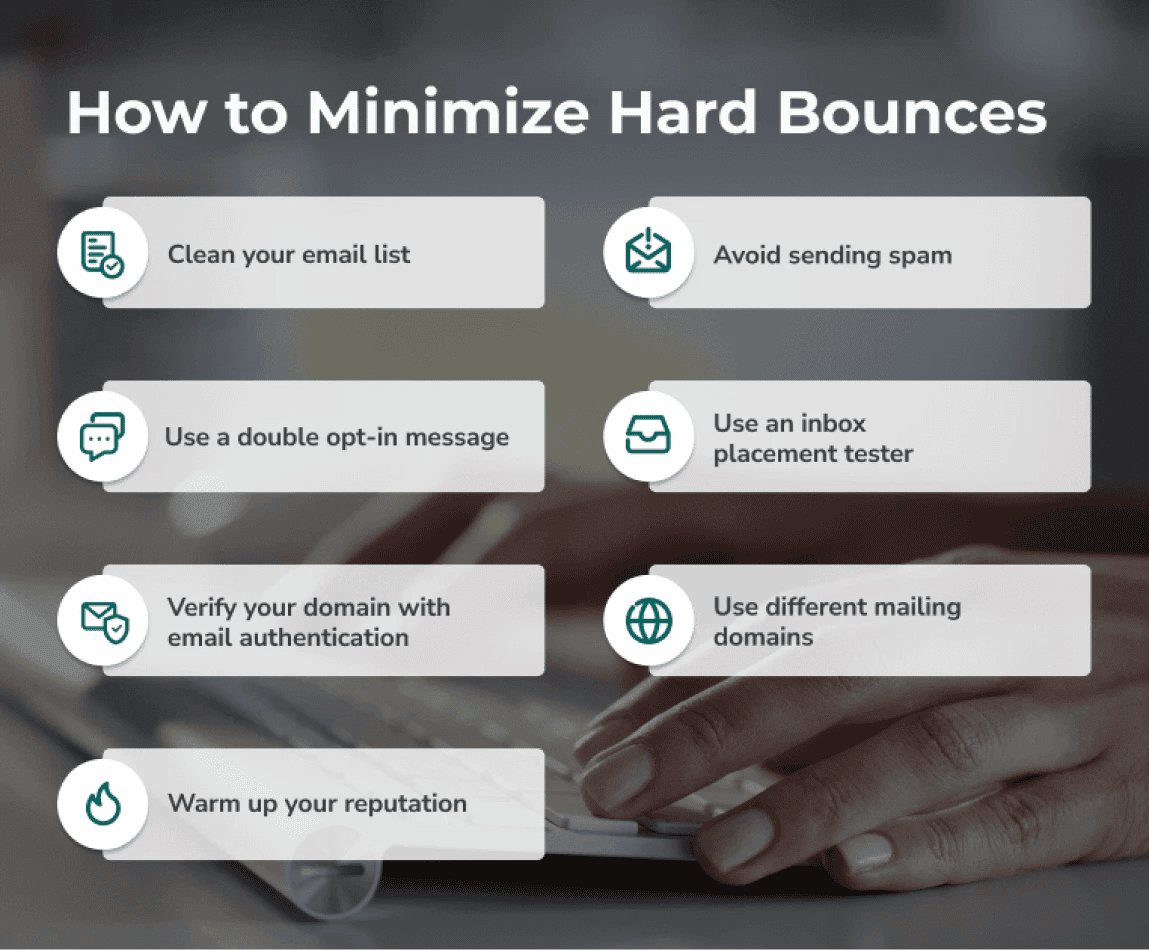
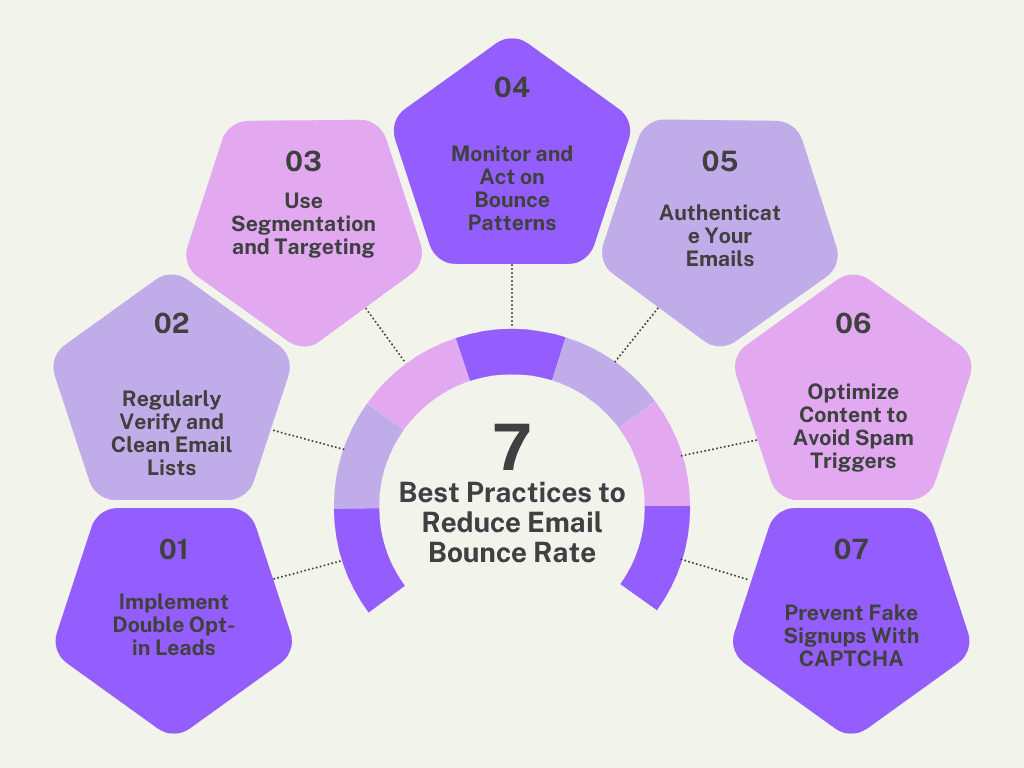
The standard advice treats every tip, double opt-in, list cleaning, authentication, segmentation, as equally urgent. It isn't. Suppressing hard bounces changes your rate within one send. Verifying the list changes it within a week. Fixing authentication changes deliverability over the following month. Working in that order recovers the most reputation for the least effort.
Today: suppress every hard bounce
- Pull the list of addresses your ESP has already flagged as hard-bounced.
- Suppress them before your next send, don't wait for a monthly cleanup cycle.
- Confirm your ESP auto-suppresses on future hard bounces, most do, so this is a one-time backlog clear.
This step costs almost nothing and moves your rate the same day, since a hard bounce will never convert into a delivered message no matter how many times you resend to it.
This week: verify the list
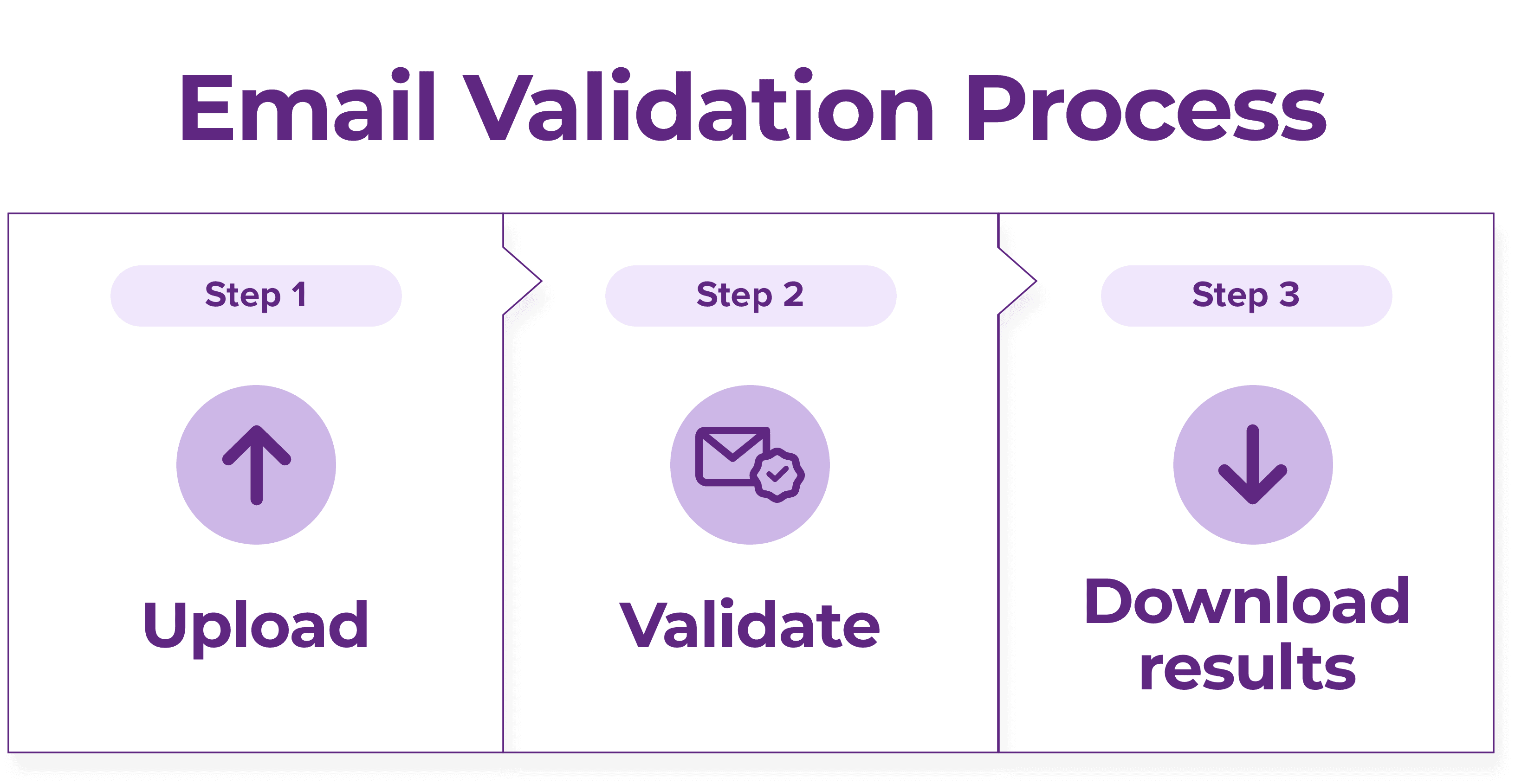
A syntax check alone confirms an address is formatted correctly, not that a mailbox exists behind it, which is why email verification means running an SMTP handshake against each address rather than just checking the format. Tools built for this, including BounceCheck, return a confidence score for each address, valid, risky, or invalid, rather than a flat pass or fail, and price by verification credits that don't expire, so a one-time backlog cleanup doesn't force you into a recurring subscription you don't need.
Vendors advertise dramatic before-and-after numbers for this step. listclean.xyz, for instance, advertises a drop from 4.8% to 0.2% on a 200,000-contact B2B list after a single verification pass. Treat that as a vendor claim, not an industry benchmark, since the starting list quality, industry mix, and definition of "bounce" behind that figure are the vendor's own and unverified by a third party. BounceCheck has not published an equivalent first-party before-and-after figure for a comparable list, so there is no independently verified number to substitute here yet, only the reminder to read vendor-advertised drops as marketing claims until a sender publishes its own before-and-after data.
This month: fix SPF, DKIM, and DMARC
SPF, DKIM, and DMARC records take longer to fix because they involve DNS changes and a monitoring window, not a one-time list edit. Consolidate SPF down to a single record, count the v=spf1 lines and merge any duplicates, since more than one line starting with v=spf1 for the same domain is a common cause of PermError responses. Align your DKIM selector with the ESP actually sending your mail, then move DMARC from a monitoring-only policy toward quarantine or reject once the aggregate reports show your legitimate mail passing cleanly.
If you're moving to a new sending domain or IP as part of this fix, warm it up gradually rather than sending your full volume on day one, since mailbox providers rate-limit senders with no sending history. Klaviyo's manager of deliverability and compliance strategy, Tonya Gordon, recommends keeping send volume to your least-engaged subscribers under 15% of your most-engaged subscriber count, so authentication and reputation fixes aren't undone by continuing to mail people who never interact with your messages.
How bounce rate affects deliverability and revenue
Bounce rate feeds directly into sender reputation, and mailbox providers use that reputation to decide whether your next message reaches the inbox or the spam folder. A rising bounce rate is one of the clearest list-rot signals mailbox providers watch, so the effect compounds: a few bad sends can suppress inbox placement for good campaigns that follow.
monday.com models the revenue side with a hypothetical example: a list of 50,000 subscribers sending at a $75 average order value can lose roughly 1,000 potential customers per campaign to a bounce-driven drop in reach, translating to about $750 in lost revenue per weekly send, or close to $39,000 over a year. It's a hypothetical illustration from monday.com, not a measured industry figure, but it shows how a bounce problem compounds weekly rather than costing you once.
FAQ
How often should I clean my email list? Remove hard bounces monthly, since they should never be resent to. Review soft-bounce patterns quarterly rather than reacting to a single bounce. Audit long-term inactive subscribers about twice a year to keep engagement-based sender reputation healthy.
What causes emails to bounce even when the address looks correctly formatted? A syntax check confirms formatting, not that a mailbox exists. Catch-all domains accept every address at the SMTP handshake regardless of whether anyone receives it, and a temporary server issue or full mailbox produces a soft bounce despite a perfectly valid address.
Does Apple Mail Privacy Protection affect bounce rate tracking? No. Bounces are recorded at the mail-server level, before any device-side privacy feature applies, so Apple Mail Privacy Protection has no effect on how bounce rate is measured or reported.
Is a 5% bounce rate bad? It's borderline to high risk. monday.com rates anything over 5% as high risk, and Campaign Monitor flags 5%-10% as a sign of a real problem worth investigating rather than waiting out.
How many times will a soft bounce retry before it's treated as a failure? Most platforms retry three to five times over roughly 72 hours before flagging the address, per monday.com. Klaviyo goes further and auto-suppresses a subscriber profile after seven consecutive soft bounces.