B2B SMS Outreach: The 2026 Playbook for Texts That Get Replies

B2B email open rates have fallen below 20%. SMS, by contrast, holds a 98% open rate, with most messages read within three minutes of delivery. That gap is why a serious outbound team in 2026 cannot afford to ignore text as a channel, but it is also why one careless campaign can torch a brand inside a week. B2B SMS outreach works only when you earn the opt-in, write for a human, and respect the inbox you are tapping into.
This guide walks through what B2B SMS outreach actually is, how to stay on the right side of compliance, the anatomy of a message that gets a reply, the use cases worth running, and the cadence that keeps a campaign from burning a list.
What B2B SMS Outreach Actually Is
B2B SMS outreach is the practice of sending short, permission-based text messages to business contacts (prospects, customers, partners) to start a conversation, confirm an action, or move a deal forward. It is one-to-one or tightly segmented, not a bulk promotional blast. The audience is decision-makers and operators, and the messages are tied to specific points in a sales cycle or account workflow.
B2B outreach in general is any outbound communication aimed at other businesses to generate leads, book meetings, or build account relationships. SMS is the youngest channel in that stack and the fastest to land. It does not replace email or phone; it sits next to them and handles the moments where speed matters more than depth.
Why SMS Gets Through When Email Does Not
The case for SMS in B2B comes down to behavior. Decision-makers are mobile-first, their inboxes are overflowing, and their phones are always within reach. A few numbers explain the gap:
- Over 80% of text messages are opened, and 35-45% are interacted with (responded to, clicked through). Compared to email's sub-20% open rate, that is a different channel entirely.
- The average B2B decision-maker receives 121 emails per day. A text does not have to fight a hundred competing subject lines.
- 98% of texts are opened in the first three minutes. When timing matters, no other channel comes close.
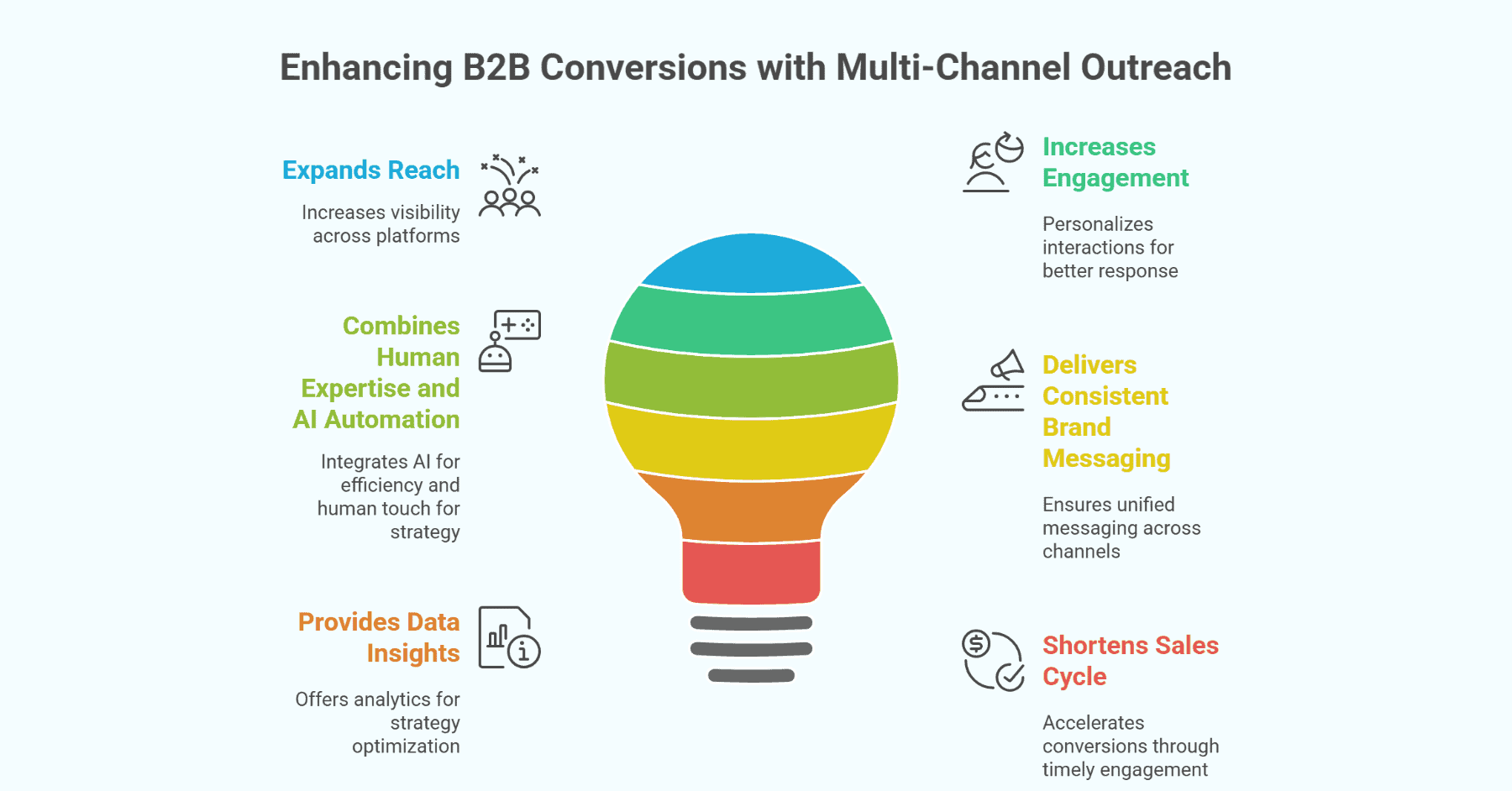
- Campaigns using 3+ channels see a 287% higher conversion rate than single-channel efforts (Omnisend, 2023). SMS is the easiest channel to add to an existing email-and-phone motion.
- Multi-channel outreach involving SMS produces about 22% higher conversion rates than email-only sequences, based on operator data from teams running both side by side.
Does SMS work for B2B? Yes, but only when the message is short, permission-based, and tied to a specific business outcome. The same texting habits that make B2B SMS effective also make it intrusive when used wrong, which is exactly why compliance comes first.
Earn the Right to Text: Consent and Compliance
Is B2B cold SMS illegal? In most cases, yes, cold texting without consent is prohibited under the Telephone Consumer Protection Act (TCPA) in the US and PECR/GDPR in the EU and UK. Sending commercial texts without prior written consent risks fines, account suspension, and a tarnished brand. The good news is that consent is straightforward to capture.
Three compliant ways to get permission:
- Opt-in checkbox on a sign-up, demo request, or pricing form: "Check this box to receive text messages from [Company]."
- Verbal consent over the phone when you have an existing business relationship. Verbal opt-ins cover informational texts, not promotional ones.
- Text-to-join keyword, where the prospect texts something like "SUPPORT" to a short code or 10-digit number, initiating the SMS conversation themselves.
Layered on top of TCPA, you need to honor CAN-SPAM principles (truthful sender ID, easy opt-out), CCPA for California residents, and state laws like Florida's mini-TCPA, the Oklahoma Telephone Solicitation Act, and the Connecticut Anti-Spam Law. Each text should include a one-line opt-out ("Reply STOP to opt out") and your team must honor every STOP request immediately. Never add an opted-out contact back into a future campaign, that is both a legal violation and a brand killer.
The Anatomy of a Professional B2B Text
A professional B2B text is short, identifiable, and asks for one thing. Three rules cover most of what makes a text land:
First, identify yourself in the first five words. If the recipient cannot see who you are and which company you represent at the top of the message, they will delete the thread. "Hi Sarah, Alex here from BounceCheck." is enough.
Second, keep the total under 160 characters so the message is not split across two segments, which often arrives garbled and looks amateurish. Your structure inside that budget: context (why you are texting), value (what they get), action (what to do next).
Third, end with a single, low-friction call to action. Frame it as a yes/no question or a one-tap link, not a calendar coordination ask. "Reply YES and I'll send the case study" outperforms "What time works for a 30-minute call?" every time.
A worked example, in the voice of a deliverability product:
Hi Sarah, Alex here from BounceCheck. Saw your team just opened up cold-email sequences for Q3. Our verifier cuts hard bounces by ~70% on new lists. Want a one-pager? Reply YES.
That is 30 words, under 160 characters, with identification, context, value, and a low-friction ask. The same anatomy that powers cold-email copy holds up almost identically here, the channel just enforces the discipline.
5 High-Impact Use Cases
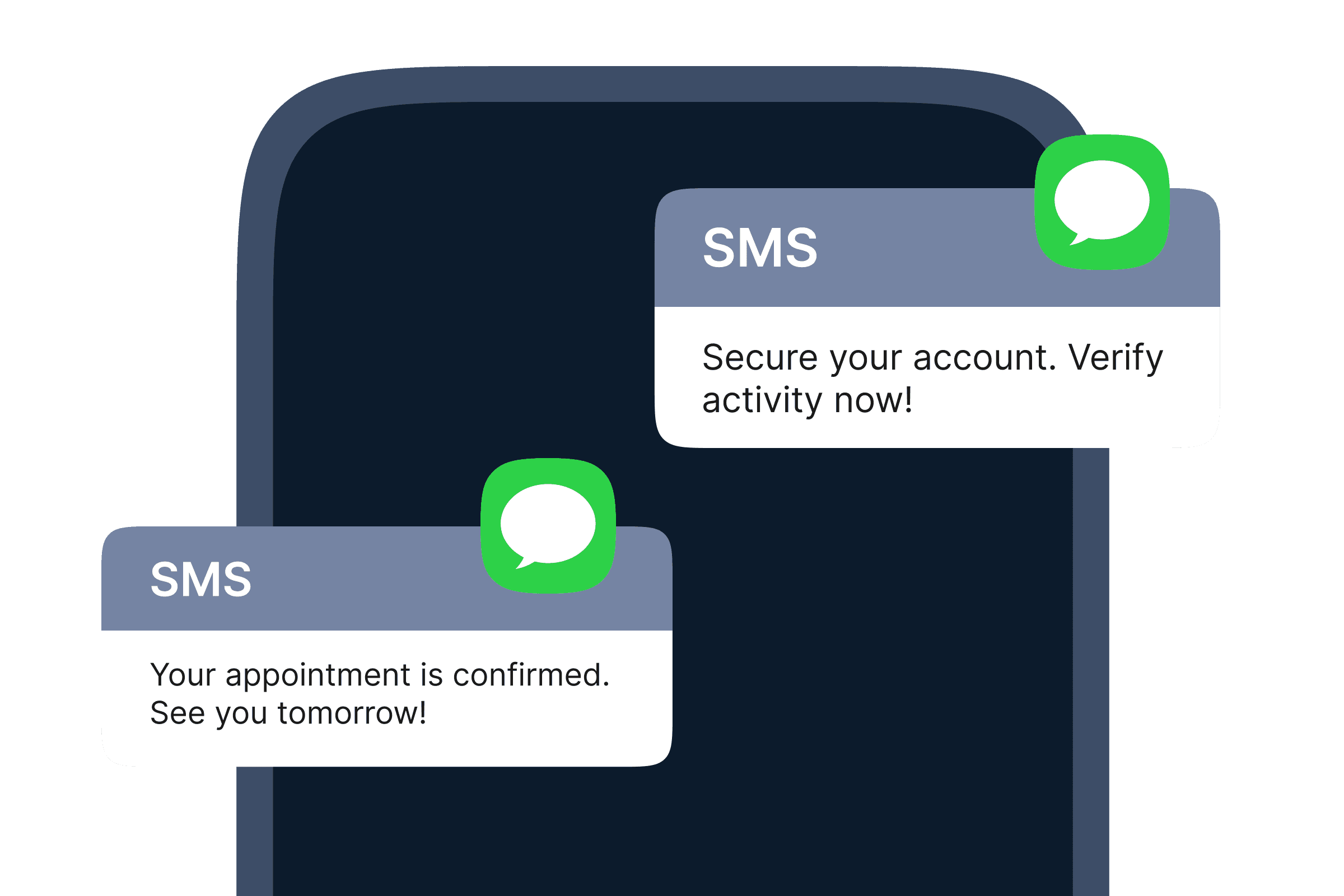
B2B SMS is most valuable for surgical, one-to-one moments rather than mass marketing. The following use cases consistently produce measurable lifts in pipeline velocity.
1. Appointment confirmations and reminders
No-shows are a drain on every sales calendar. A 24-hour SMS reminder cuts no-show rates by up to 38%, and a text sent 15 minutes before a scheduled call can pull that number down further, sometimes by as much as 40%. Always include a one-tap reschedule option so the prospect does not have to bounce back to email.
Example: Hi Jordan, your strategy session with Alpha Consulting is confirmed for Tuesday at 11 AM. Reply CONFIRM or CHANGE to reschedule.
2. Re-engaging ghosted or stagnant leads
When a prospect has gone dark on email for two or three weeks, a single short text can resurface the conversation. Reference the original context, share a low-pressure piece of value (a case study link, a relevant stat), and ask one yes/no question. Time the send to mid-morning, when the prospect is already in a work mindset.
3. Post-event follow-ups
The 60 minutes after a webinar, conference booth conversation, or demo is the window where momentum is hottest. A text that references a specific moment from the conversation (a pain point they mentioned, a question they asked) converts dramatically better than a generic follow-up email sent the next day.
4. Contract, proposal, and renewal alerts
Deals stall when documents sit unread in a buyer's inbox. A short text alerting the stakeholder that a proposal has landed, or that an annual renewal is two weeks out, prevents the slow drift that kills B2B cycles.
Example: Hi Olivia, your annual maintenance plan with SkyLink renews on May 5. Reply RENEW or REVIEW to discuss options.
5. Urgent account or service updates
SMS is the right channel for time-sensitive operational alerts: a scheduled maintenance window, a regulatory change that affects an account, a critical product update. Reserve this use case for genuine urgency, the moment you use it for marketing, you lose the channel's signal.
Timing, Cadence, and the 1:3 Ratio With Email
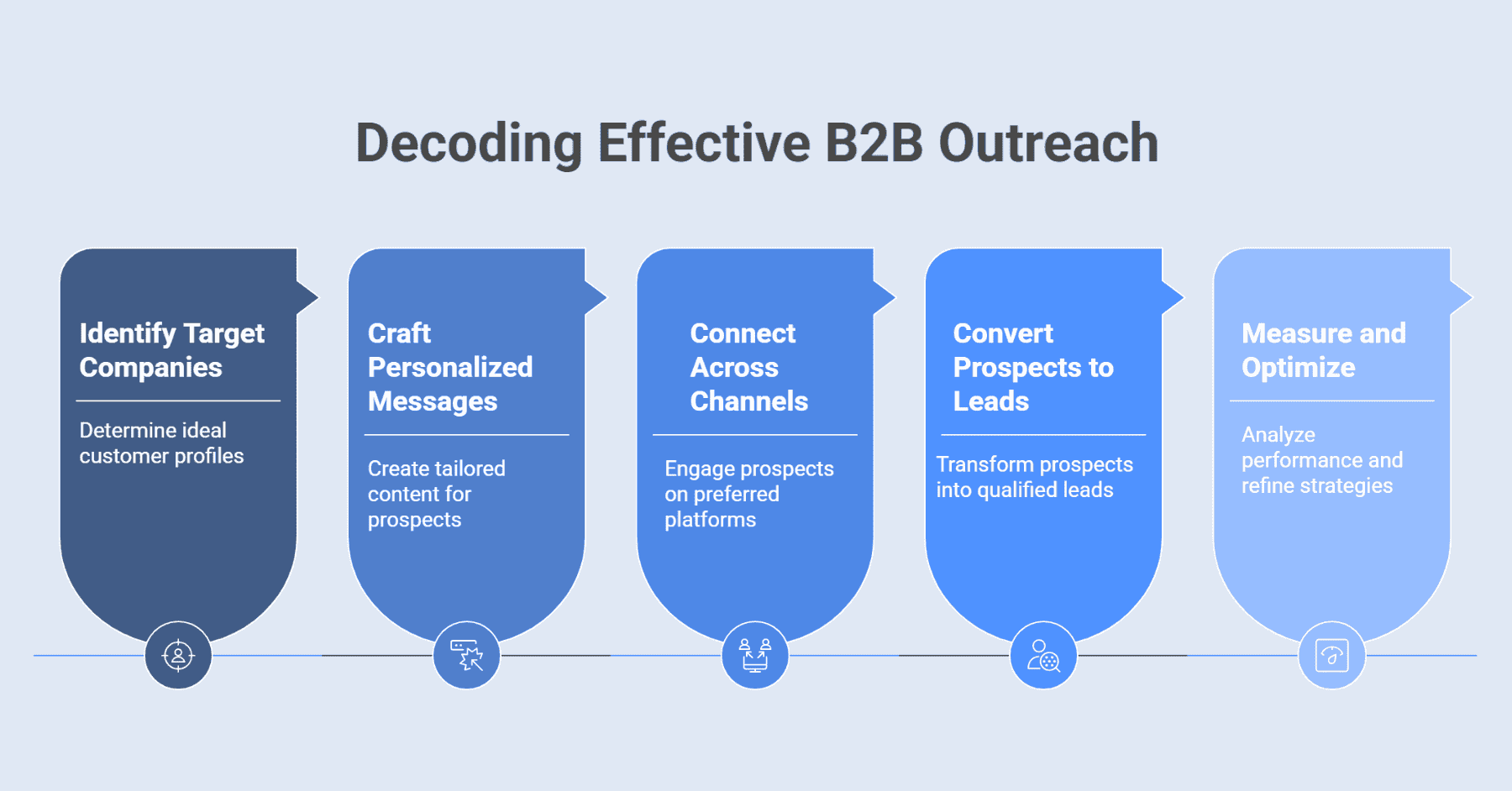
Getting the timing right matters almost as much as the copy. A handful of rules hold up across most B2B outbound:
- Send window: 9:00 AM to 5:30 PM in the recipient's local time. Peak engagement falls on Tuesday, Wednesday, and Thursday between 10:00 and 11:30 AM, when the inbox surge has cleared and the day's calendar is settling.
- Sequence length: cap a single sequence at 3 texts over about 10 days. 78% of conversions happen in the first two touchpoints, sending more than three drops response rates and risks a STOP reply.
- SMS-to-email ratio: roughly 1 text for every 3 emails. SMS is the "tap on the shoulder" that keeps your email content prioritized, not the primary delivery channel.
- Pre-call reminder: a single text 15 to 30 minutes before a scheduled call cuts no-shows substantially.
- Avoid the dead zones: Monday mornings (inbox triage) and Friday afternoons (focus shifts to the weekend) consistently underperform.
Layer SMS on top of an existing email sequence rather than replacing it. The combination outperforms either channel alone, and the lift compounds with each additional well-timed touchpoint.
Metrics That Matter
The vanity metric for SMS is the 98% open rate. The metrics that actually predict pipeline are quieter:
- Response rate: what percentage of recipients reply at all. A well-targeted B2B SMS campaign sits between 30% and 45%.
- Click-through rate: what percentage interact with a link or scheduling option.
- Conversion rate: the percentage of contacts who complete the action you wanted (booked a call, confirmed a renewal, accepted a proposal).
- Response time: how quickly your team replies once a prospect responds. Above 15 minutes and the conversation goes cold.
- Opt-out rate: the canary in the coal mine. A creeping opt-out rate signals that frequency, targeting, or relevance is off, well before deliverability suffers.
- No-show delta: for appointment reminders specifically, the difference in no-show rates between texted and untexted bookings is the cleanest ROI signal you can pull.
Watch all six together. A campaign that lifts response rate but tanks opt-out rate is borrowing future deliverability against this month's pipeline, and that bill always comes due.
The same hygiene principles that protect your sending domain on email apply to SMS. Verify phone numbers before a major send, scrub the list of inactive numbers regularly, and treat consent as a permanent record, not a one-time checkbox.
From Compliant Texts to a Steady Pipeline
B2B SMS outreach rewards restraint. The teams getting the strongest results are not the ones blasting the most texts, they are the ones who treat every send like a one-to-one conversation, ask for permission first, write under 160 characters, and time the message to a real business moment.
The shortest version of the playbook: capture consent properly, identify yourself in five words, give one piece of value, end with a low-friction ask, and follow up no more than three times. Pair SMS with a clean email list and a verified sender reputation, because a campaign that lives on both channels at once falls apart the moment either one breaks. Run it that way and SMS stops being a risk and starts being one of the highest-leverage parts of your outbound stack.
BounceCheck Team
The team behind BounceCheck - helping businesses verify emails and improve deliverability.