B2B List Building: How to Build a Targeted Contact List That Actually Drives Replies
 BounceCheck Team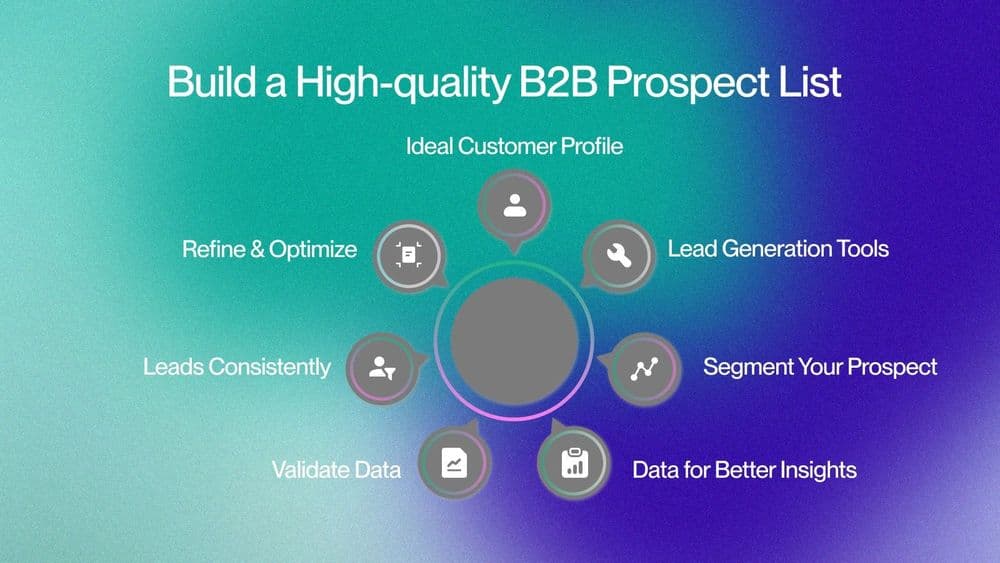
Before your next send Find the addresses that will bounce.
Verify an email freeMost B2B outreach fails because of the list, not the message. Sending to outdated contacts, the wrong job levels, or companies outside your target market wastes budget and damages your sender reputation. B2B contact data decays at roughly 30% per year, which means a list built six months ago may already be working against you.
This guide walks through how to build, verify, and maintain a targeted B2B contact list (sometimes called a sales lead list or B2B prospect list) that your sales and marketing teams can rely on to generate qualified leads, run targeted outreach campaigns, and keep your CRM pipeline full.
What B2B List Building Actually Means
B2B list building is the systematic process of identifying and collecting verified contact information for businesses and decision-makers that match your ideal customer profile. A typical B2B contact list includes first and last names, job titles, company names, verified email addresses, direct dials, LinkedIn URLs, and firmographic data like company size, industry, and location.
Precision matters more than size. A focused B2B email list of 200 well-matched decision-makers will outperform a list of 2,000 unfiltered contacts. The terms B2B prospecting list, B2B prospect list, and B2B marketing list all refer to the same thing: a curated set of target contacts ready for outreach.
Modern list building also goes beyond a static directory. Leading revenue organizations treat it as a continuous, data-driven operation that combines premium data providers, AI-assisted research, and human verification, instead of a one-time data pull.
Cold, warm, and nurtured leads
Not everyone on a B2B list is equally ready to buy. Contacts generally fall into three groups:
- Cold leads: no prior awareness of your product. They need education before they engage.
- Warm leads: aware of your product or have shown early interest, such as visiting your website or downloading content.
- Nurtured leads: have had multiple touchpoints and are closer to a purchase decision.
Most contacts on a new B2B list are cold leads. Where a contact sits in the sales funnel determines how you approach them: cold leads need education, warm leads need relevance, nurtured leads need a clear next step.
Why List Quality Drives Outbound Results

A few numbers explain why every serious outbound team treats list building as a first-class operation, not a checkbox:
- B2B contact data decays between 22.5% and 70.3% per year, meaning up to nearly three-quarters of your list can be outdated within twelve months if it is not actively maintained.
- Poor data quality costs an average of $12.9M per year per organization in wasted spend, lost sales opportunities, and operational inefficiencies tied to bad contact data.
- 27.3% of sales-rep time is lost annually chasing bad leads and correcting inaccurate contact data, more than 500 hours per rep that better list building can reclaim.
- Clean, real-time data practices improve campaign response rates by 20% or more across cold email, cold calling, and LinkedIn outreach.
The payoff lines up across the funnel. Accurate, well-targeted lists raise SDR productivity, lift conversion and response rates, make pipeline forecasting more predictable, and lower customer acquisition cost. Verifying email addresses before outreach also helps ensure that your carefully built list is ready for execution across phone, email, and LinkedIn.
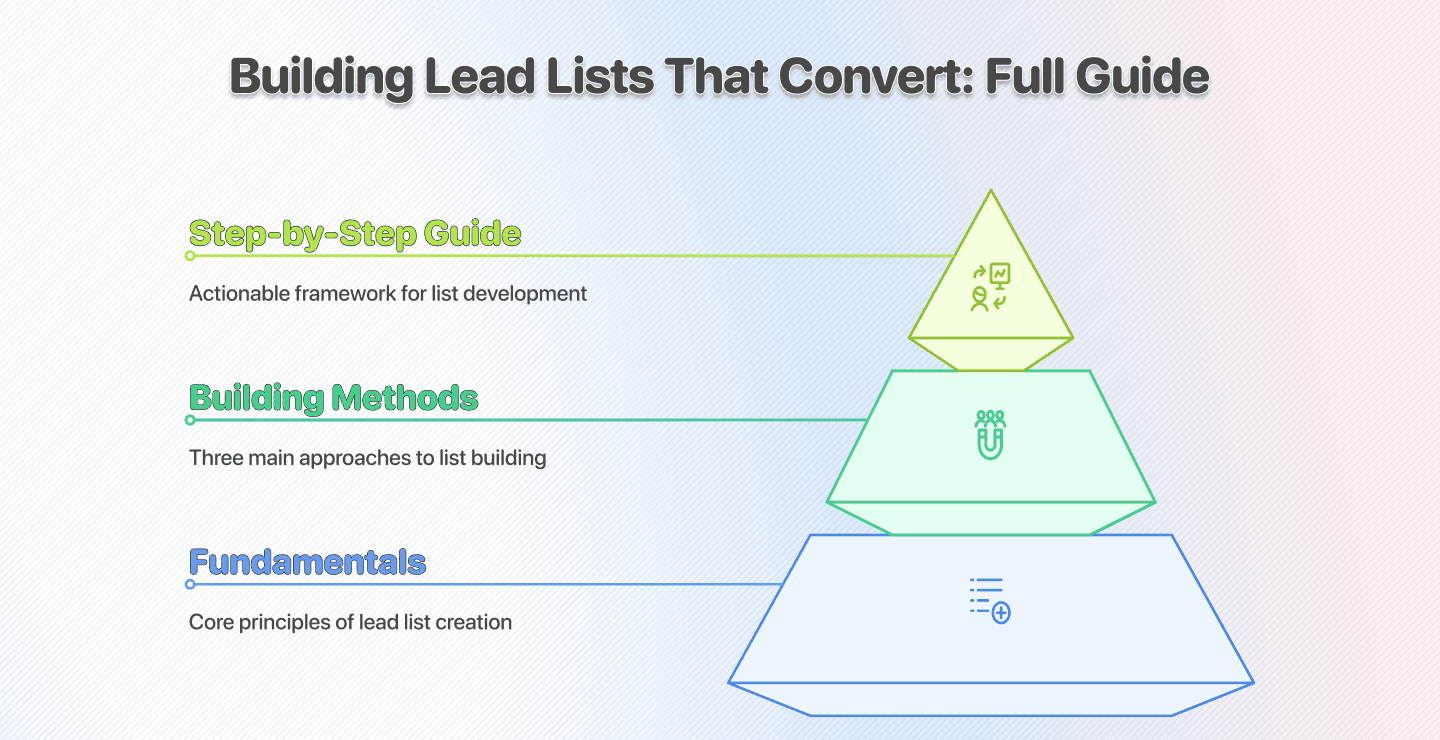
The 6-Step Process to Build a B2B List
Building a strong B2B list follows a repeatable sequence: define your ICP, identify target companies and decision-makers, use a prospecting tool, enrich the data, verify before outreach, and tie the list back to your CRM. Each step filters out contacts that do not fit so you spend less time chasing leads that were never going to buy.
1. Define your ideal customer profile (ICP)
Start by analyzing your existing best customers: accounts that got the most value from your product, stayed the longest, or brought in the most revenue. Pull the traits they share, then turn those traits into filters. Common ICP attributes include:
- Industry and sub-industry
- Company size (employee count and revenue range)
- Location
- Job titles and management levels of the buyers
- Technology stack the company already uses
- Funding stage, for teams targeting growth-stage businesses
Defining who you do not want is just as important. Excluding segments by tech stack, revenue, or model (for example, B2C-only, agencies, or very small teams) before list building prevents SDRs from wasting cycles on accounts that rarely convert.
2. Identify target companies and decision-makers
With your ICP defined, build a list of companies that fit. Industry directories, LinkedIn company search, and Fortune rankings are common starting points for manual research. Once you have a company list, narrow down to the contacts you actually need. For most B2B products, this means VP-level and above or the department head in the relevant function, whoever holds budget authority or has the most influence over the purchase decision.
For strategic accounts, map the full buying committee: economic buyer, champion, end users, and influencers. That typically means three to eight contacts per account, depending on deal size and complexity. Having multiple stakeholders per account enables better multi-threading and reduces the risk of a deal stalling when a single contact goes dark.
3. Use a B2B prospecting tool
A B2B list builder replaces manual research with filtered search across a large, verified database. These platforms let you set your ICP criteria (industry, company size, job title, location, technology stack) and instantly return a custom list of matching contacts with verified emails, direct dials, and phone numbers ready for outreach.
UpLead, for example, gives access to 180 million contacts in 200+ countries, filterable by 50+ criteria including job title, industry, company size, revenue, location, technology stack, and funding stage. Apollo.io, ZoomInfo, Clearbit, and LinkedIn Sales Navigator are the other names that show up on most modern stacks.
4. Enrich your contact data
Data enrichment means appending missing information to contacts you already have. If your CRM has company names but no verified emails, phone numbers, or job titles, an enrichment tool fills in those fields automatically. It also catches job-title changes and company moves that would otherwise cause your outreach to hit the wrong person or bounce entirely.
Enriched data adds depth beyond basic contact fields. Knowing a prospect's tech stack, funding stage, or recent company move lets you tailor your message to their actual situation rather than sending a generic pitch.
5. Verify contact details before you reach out
Contact data decays at roughly 30% per year. A twelve-month-old list may have a significant portion of outdated or invalid contacts. Sending campaigns to unverified lists produces higher bounce rates, which damages your email sender reputation and reduces deliverability on future sends.
Always verify emails before a major campaign. Real-time verification (where each address is checked at the moment of download) is more accurate than batch verification run days or weeks earlier. Many teams plug a dedicated verifier like BounceCheck into their workflow to clean lists before each send.
6. Integrate the list with your CRM and engagement tools
Push contacts directly into your CRM rather than managing them in spreadsheets. The modern B2B tech stack runs on three layers: data and signals, CRM, and engagement tools. Keeping these connected means your sales team has a single view of every prospect, outreach history is tracked automatically, and duplicate contact is avoided when multiple reps are working the same account.
Where to Find B2B Leads: 8 Sourcing Channels
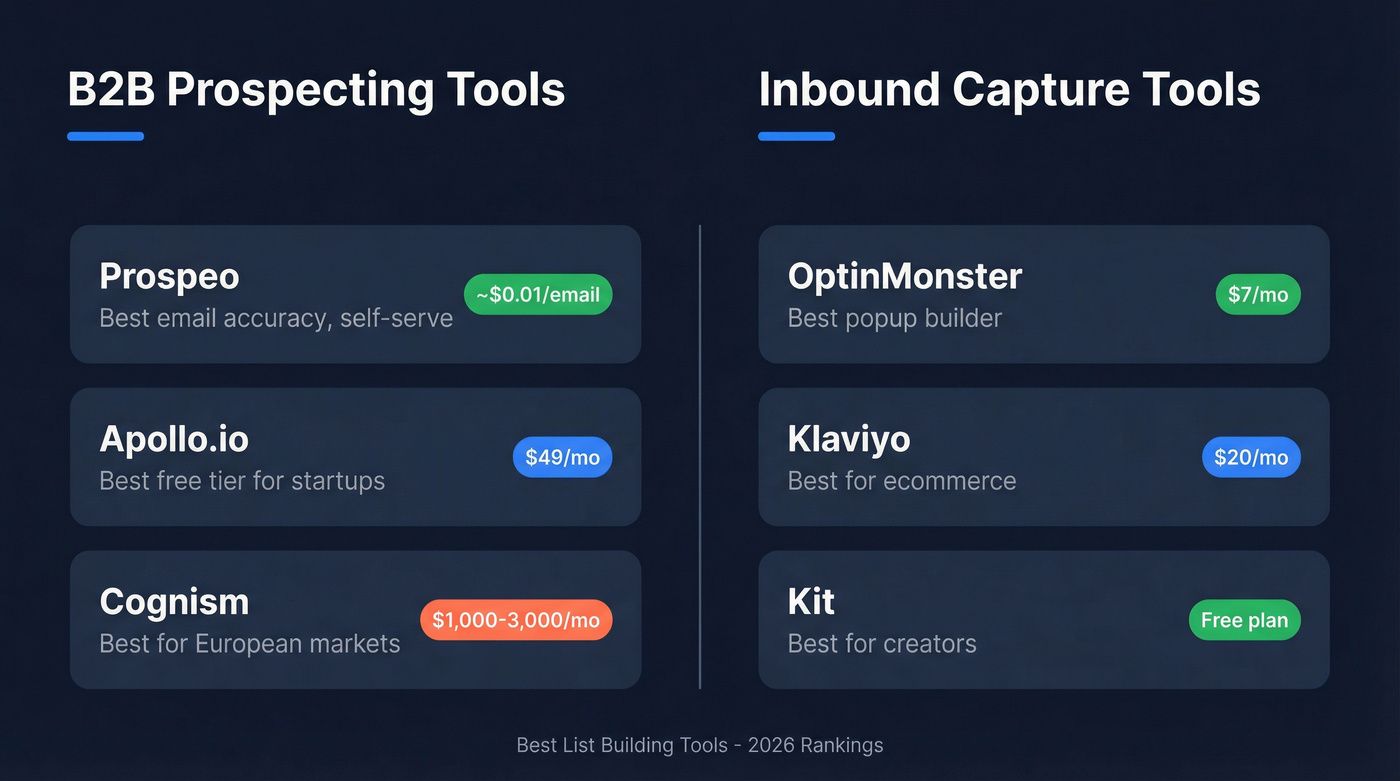
There is more than one way to fill a list. Most teams blend two or three of these channels rather than relying on a single source.
1. Buy from trusted data providers
When evaluating a paid list source, check data accuracy and refresh cadence, targeting filters, data volume, GDPR/CCPA compliance, provider reviews, and integration with your outreach tool. Random low-cost lists almost always under-deliver on accuracy.
2. Content marketing
Content marketing is resource-intensive, but the leads it brings in have a higher chance of conversion because they self-qualify through engagement. Once you have the bandwidth, blog posts, guides, and gated assets become a reliable inbound feeder.
3. Social media (especially LinkedIn)
LinkedIn is the priority social platform for B2B. Sales Navigator filters identify decision-makers quickly, and LinkedIn email-finder extensions fill in the missing contact details. Posting consistently also builds the personal-brand surface area that warmer outreach relies on.
4. Online directories
Directories like Crunchbase, AngelList, and industry-specific listings carry self-verified company data, which makes them a high-quality manual source. Register your own business there too, since potential customers often browse these platforms to find solutions.
5. Referral and affiliate programs
Happy customers are the cheapest acquisition channel you have. A formal referral or affiliate program turns satisfied accounts into a steady flow of pre-qualified introductions, often closed faster than cold leads.
6. Trade shows and events
Face-to-face access plus high purchase intent makes trade shows one of the highest-quality lead sources. The trade-off is cost: events are resource-intensive, so reserve them for ICPs where in-person presence is worth the spend.
7. Partner with non-competing brands
Co-marketing with a partner who serves the same ICP but a different problem set gives both sides reach to a wider audience and a higher chance of landing high-ticket clients. Stick to non-competing partners to avoid a conflict of interest.
8. Webinars
Webinars deliver similar networking benefits to expos at a fraction of the cost. Topics tied to current trends or specific pain points attract higher-intent attendees, and the recording keeps generating leads long after the live session ends.
What a Modern B2B Contact List Should Include

A list that drives pipeline goes well past names and emails. Treat each record as a structured profile with the following layers:
- Verified contact data: confirmed name and job title, work email plus direct dial (no catch-all inboxes), LinkedIn URL, and persona tags grouping contacts by decision-maker type (Economic Buyer, Technical User, Champion).
- Company-level enrichment: industry and sub-sector, employee count by department, revenue and funding stage, tech stack, hiring signals, and office locations.
- Intent and behavioral signals: website activity (pages viewed, time spent, return visits), keyword-based research intent, content engagement (downloads, webinars, email clicks), and relevant social signals.
- Lead source and attribution: inbound versus outbound, paid campaign source, referral or partner origin. Tag this so you can compare bounce rate, connect rate, and meeting rate by source.
- Buying-stage context: sales readiness (problem-aware, exploring vendors, comparing pricing), recent role changes, and buying triggers like funding rounds, M&A activity, expansion, or layoffs.
- Account-fit signals: an ICP fit score combining role, tech stack, industry maturity, and past-win data, plus deal-killers like existing vendor lock-in.
- Communication history: email, call, and meeting logs with sentiment tagging, sequence progress, previous objections, and CRM funnel stage.
- Decision-making chain visibility: primary decision-maker, influencers across Finance, Legal, and Ops, and an org-chart view of how stakeholders relate to each other. Once every layer is in place, the final step is to verify the list before outreach, so bounced emails and dead contacts don't undo the work that went into building it.
Common Challenges and How to Handle Them
Three problems show up on almost every outbound team's list-building post-mortem. Data quality is the most frequent one. Contacts change jobs or leave companies continuously, so a list that was accurate twelve months ago may have a significant portion of outdated records. High bounce rates then damage your sender reputation and can get your domain flagged by email providers. Real-time email verification and regular list cleaning handle most of this before it ever reaches a campaign.
Low response rates usually trace back to poor targeting rather than weak messaging. If your list contains contacts outside your ICP, even a strong email will not generate quality leads. The fix is a tighter ICP definition before the build and stricter filtering during it. A smaller, better-targeted list consistently outperforms a large, loosely filtered one on response rates and sales cycle length.
Job changes create missed opportunities in both directions. Contacts you have built a relationship with can go dark when they move to a new company. Meanwhile, people at companies you have not yet approached may have just moved into a decision-making role. Tools with job-change alerts and regular data enrichment catch these shifts before they become missed opportunities.
Best Practices to Keep Your List Fresh
Clean and deduplicate on a schedule
Audit your CRM regularly to remove duplicates, invalid email addresses, and contacts who bounced in previous campaigns. Schedule a verification pass before every major outreach campaign, or use a tool that verifies contacts at the point of download so lists arrive clean. Lists that go unchecked for six months or more are likely to have a significant portion of inaccurate records.
Segment for focused campaigns
Divide your list into segments based on industry, company size, job function, or buying stage. Focused campaigns consistently produce better response rates than generic blasts, and segmentation also makes it easier to track which messaging works best for each buyer type. Many of the same principles from email list segmentation apply directly to outbound prospect lists.
Score list sources by outcome, not opinion
Tag every contact with its source and compare bounce rate, direct-dial connect rate, reply rate, meeting rate, and opportunity rate by source. Use the data to renegotiate or replace underperforming providers and double down on the ones that consistently produce meetings.
Layer trigger events on top of static ICP
Go beyond firmographics by prioritizing accounts with recent hiring spikes, funding rounds, technology changes, or regulatory shifts tied to your value proposition. These triggers make outreach more time-sensitive and dramatically increase the odds of a relevant conversation.
Stay compliant with data regulations
B2B outreach is subject to GDPR in Europe and CAN-SPAM in the United States, with CCPA covering California separately. Confirm you have a lawful basis to contact each person, honor opt-out requests promptly, and source your data from providers with clear compliance policies. Non-compliance is not just a legal risk, it damages sender reputation and erodes response rates over time.
From a Clean List to a Working Pipeline
A targeted B2B list is the foundation under everything else: cold email, cold calling, LinkedIn outreach, ABM campaigns, and account-based retargeting. Get the inputs right and the rest of the motion gets cheaper, faster, and more predictable. Skip the verification and segmentation work and even a great message will land in the spam folder.
The shortest version of the playbook is this: build around a sharp ICP, source from two or three complementary channels, enrich each record with the context your reps actually use, verify before every send, and treat the list as a living asset that gets refreshed every few weeks rather than once a year. That is what separates a list that produces a steady flow of meetings from a spreadsheet that quietly burns budget.
§ Before your next send
Find the addresses that will bounce
Verify a single address free, or upload a CSV — the free plan includes 50 checks a month, no card needed.

BounceCheck Team
The team behind BounceCheck - helping businesses verify emails and improve deliverability.