Email List Segmentation Best Practices for Higher Engagement
 BounceCheck Team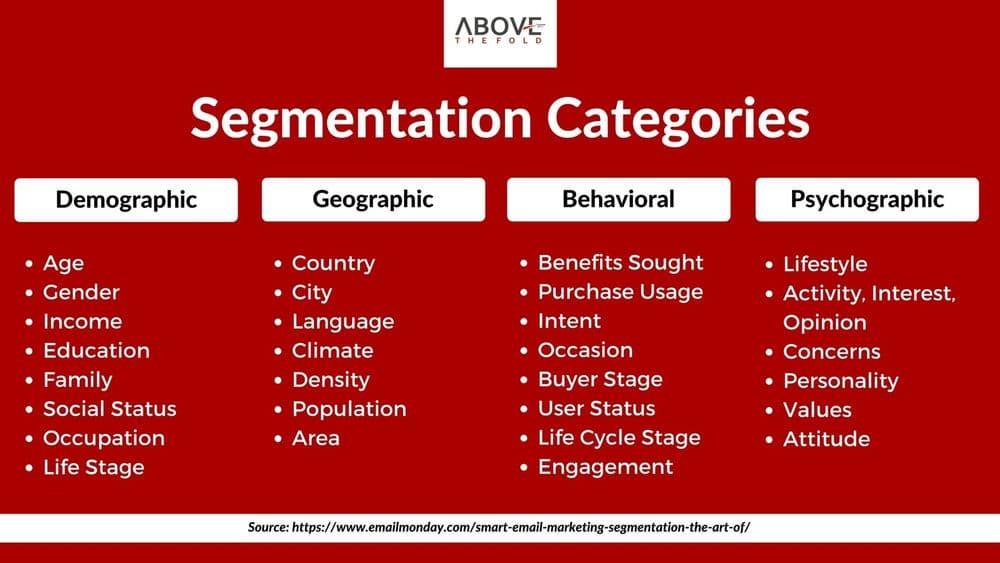
Sending one campaign to your entire list used to be normal. It still happens, and it still produces the same flat opens and the same quiet unsubscribes. The fix is not a better subject line, it is a smaller, sharper send.
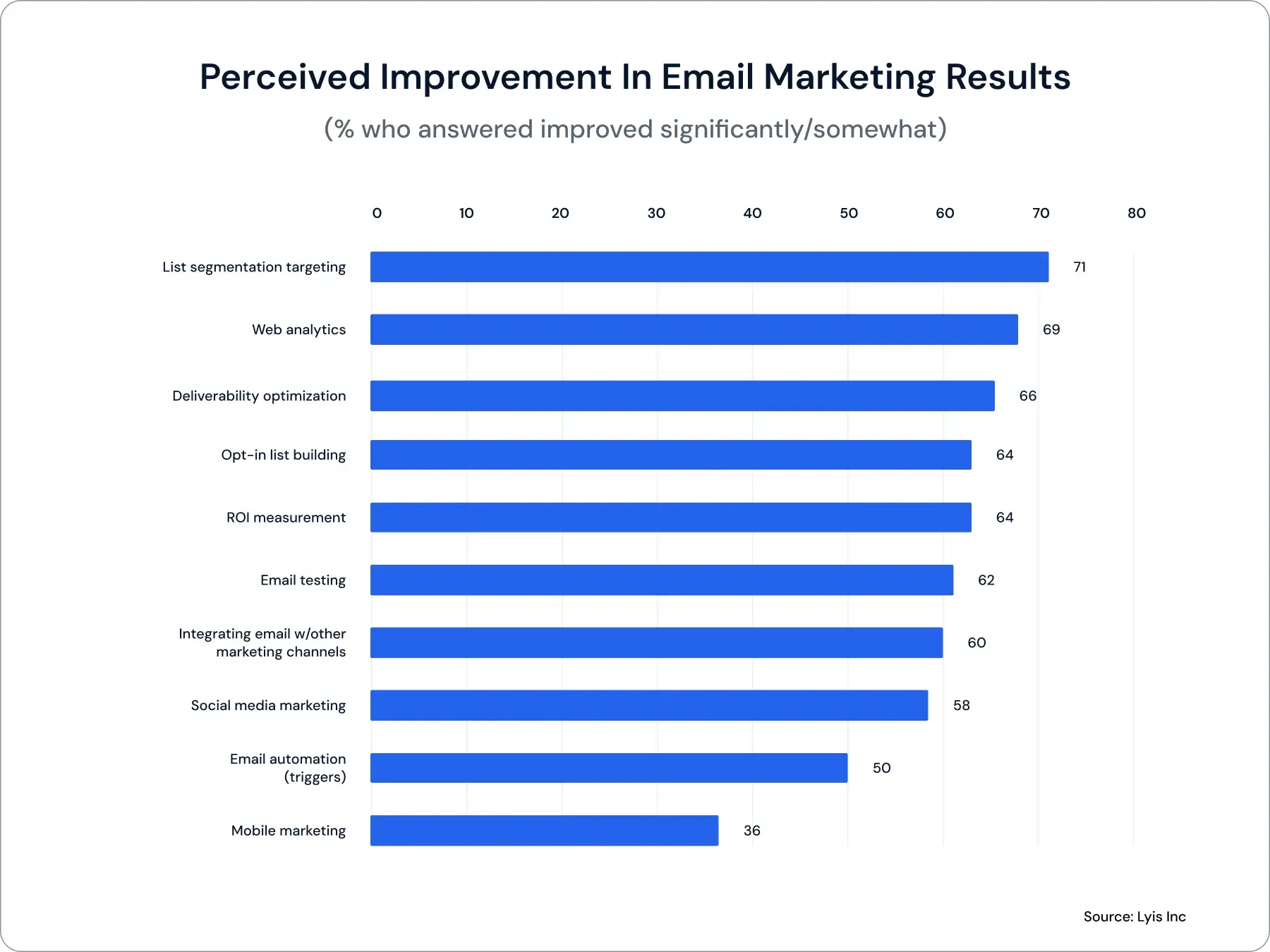
Email segmentation splits your list into focused groups based on what you actually know about each subscriber: how they behave, what they have bought, where they are in their lifecycle, and how often they want to hear from you. When the message lines up with what the reader cares about, the open rate, the click rate, and the revenue per email all move in the same direction.
And with one-click unsubscribe now built into Gmail's inbox, an irrelevant send no longer costs you an open. It costs you the subscriber.
In a recent industry survey, 24% of marketers ranked segmentation as the single most effective tactic for boosting email performance. The same research credits email marketing with $36 returned for every dollar spent. Both numbers depend on the same thing: relevance.
What follows is a working playbook of email list segmentation best practices, drawn from how top ecommerce and B2B programs actually slice their audiences today.
The four core types of email segmentation
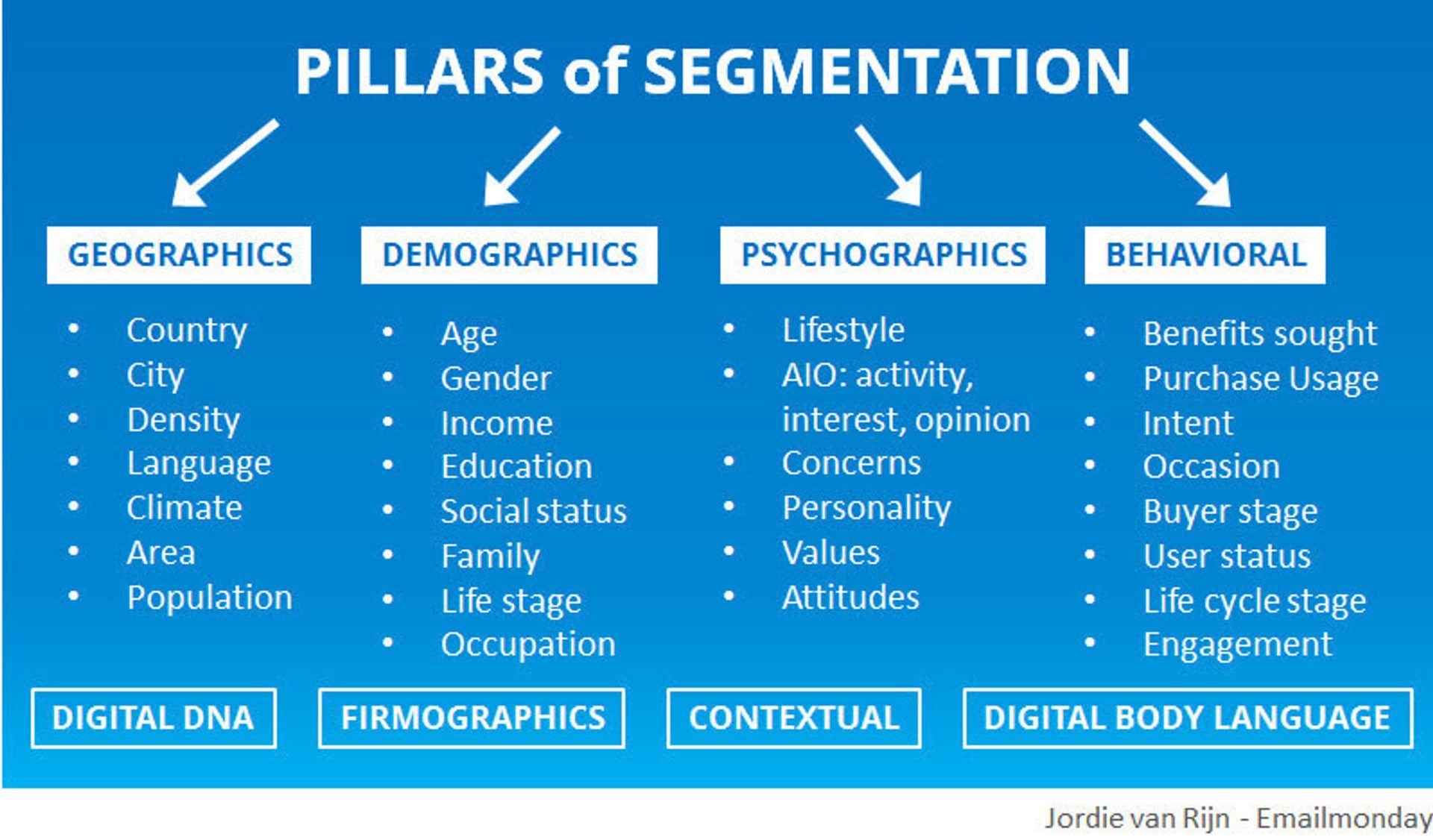
Most segmentation strategies sit on top of four basic ways to group subscribers.
1. Demographic
Groups by age, gender, job title, income, or family stage. Useful when product fit clearly differs by trait, such as a diapers brand mailing new parents differently from non-parents.
2. Behavioral
Groups by actions: opens, clicks, site visits, past purchases, time on a feature. This is the highest-leverage axis for most senders because past behavior predicts future behavior better than any demographic does.
3. Psychographic
Groups by interests, values, and lifestyle. An eco-conscious shopper and a luxury shopper might be the same age and zip code, but they need different emails.
4. Geographic
Groups by country, region, zip code, or radius around a location. Drives store-specific events, weather-relevant offers, and timezone-correct send times.
The strongest programs do not pick one. They layer behavioral on top of demographic and geographic, then refine with psychographic data captured through preference centers and quizzes.
1. Lead with behavior, not demographics
Demographics are easy to collect and easy to overrate. A 32-year-old woman in Austin is not a useful segment, because two 32-year-old women in Austin can have completely different buying patterns. Track what people do, then segment on the action.
Track opens and clicks to identify your engaged tier. Track product page views to feed browse abandonment. Track purchase frequency, average order value, and category mix to feed lifecycle and value segments. Demographic data still helps as a tie-breaker, but it should not be the primary axis.
2. Build a tiered engagement strategy
The most consequential segment in your list is the one made of people who actually open. Concentrate sends on them and your sender reputation, deliverability, and revenue per send all improve together.
A tiered engagement track is a clean way to operationalize this. Send 70% of campaigns to engaged profiles (anyone who opened or clicked recently), 20% to a broader audience, and 10% to the full list reserved for major moments.
Huda Beauty rebuilt its program around this idea after a year-over-year decline. They restricted regular sends to subscribers engaged in the last 120 days and held full-list blasts for major annual sales only. The result was double the YoY growth in attributed revenue, and the lift came primarily from deliverability gains as the list became cleaner.
This is also why an engagement segment is only as good as the data underneath it. If hard bounces and dead addresses sit in the active tier, the tier stops behaving like an active tier. Pair engagement segmentation with regular list cleanup so the segment definition stays honest.
3. Segment by customer lifecycle stage
New subscribers, prospects, first-time customers, repeat buyers, and lapsed buyers each need different things from the inbox. A welcome flow that pitches a discount on day one is wasted on a long-time VIP, and a loyalty offer is wasted on someone who has not yet bought.
A workable starting structure is a three-email welcome series for new subscribers (a friendly welcome, a short preference or interest capture, then tailored content or product recommendations), separate flows for browsing prospects and post-purchase customers, and a dedicated re-engagement track for subscribers who go quiet.
The point of lifecycle segmentation is not granularity for its own sake. It is to stop sending people content that ignores where they are.
4. Use purchase history and customer lifetime value
Once a customer has bought, their order history becomes the most predictive data you have. Segmenting on what they bought, how much they have spent in total, and how often they place an order opens up offers that demographics alone could never target.
- VIPs: early access to new products and previews of upcoming drops, framed around exclusivity rather than discount.
- Frequent purchasers: early access to sales and replenishment reminders timed to the average reorder window.
- Big spenders: invitations to limited drops and high-touch experiences that signal status.
- Unengaged VIPs: deeper discounts and curated returning-customer offers to win them back before they churn.
- Low spenders: value-driven offers, free shipping thresholds, and bundles that nudge a larger basket.
- Medium spenders: personalized recommendations and exclusive discounts based on past category mix.
These segments work best when paired with predicted metrics: predicted next order date, predicted CLV, predicted spending potential, and predicted churn risk. Most modern ESPs surface these out of the box.
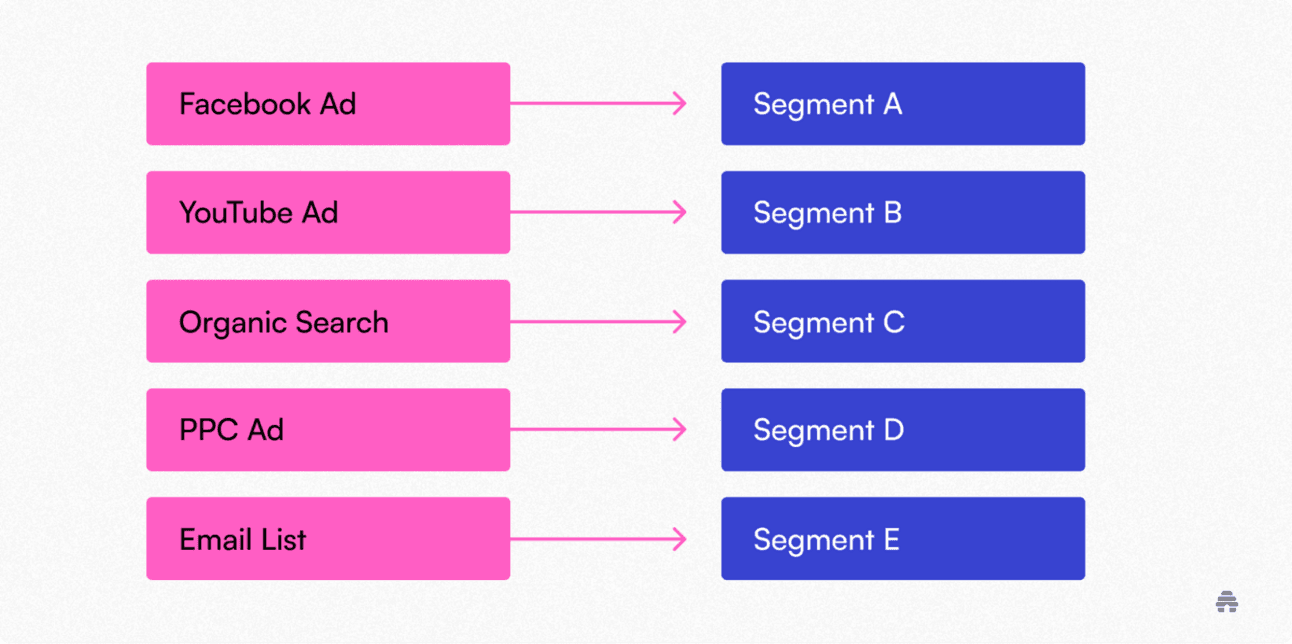
5. Personalize by acquisition source
How someone joined the list is a quiet but powerful segmentation axis. Subscribers who signed up at a promotion page expect a deal. Subscribers who signed up for a newsletter expect content. Subscribers acquired in-store expect a different brand introduction than subscribers acquired through a referral.
Marine Layer runs two welcome series for exactly this reason. In-store subscribers are introduced to the website and shipping policy. Online subscribers get a 10% off code and a store locator. Same brand, same product catalog, two different first impressions calibrated to the entry point.
Try matching the first message to the probable motivation behind the signup: discount-page signups get a discount, content signups get a content series, referrals get social proof, post-purchase signups get a review or repeat-purchase incentive.
6. Recover with cart and browse abandonment segments
Abandoned cart and browse abandonment flows are the most reliable trigger flows in ecommerce, but a flat one-size flow underperforms a segmented one.
- Cart value: low-value carts get strong messaging without a discount, higher-value carts get a discount because the ROI of recovery is worth the margin hit.
- Time since abandonment: an immediate reminder, a follow-up at 24 hours, and a final nudge at 72 hours each carry different tone and incentive weight.
- Product category: a shopper who browsed shirts and a shopper who browsed bags need different lead images and copy, even from the same brand.
- Abandonment frequency: a serial abandoner needs a different message than a first-time abandoner, often with a friction-reducing nudge rather than a discount.
- Device used: an abandonment that started on mobile usually completes faster on mobile, so the recovery email should send the reader back to where they left off.
Pulp & Press, for example, guarantees 30% off on Cyber Monday carts above $100, banking on the higher basket to absorb the discount. The math only works because the segment is defined by cart value, not by all abandoners.
7. Layer in location and seasonal triggers
Winter coat promotions land flat on subscribers in Florida in July. In-store event emails to subscribers two thousand miles away from the store waste a send. Location segmentation fixes both, and most ESPs let you segment by country, state, zip, or radius around a point.
Seasonal segmentation works the same way on the time axis. Holiday shoppers behave differently from steady-state shoppers, and tax season, back-to-school, and weather shifts each carve out narrow windows where a tailored campaign outperforms a generic one. The smaller the window, the higher the relevance and the higher the response.
8. Pair segmentation with personalization
Segmentation puts people in the right room. Personalization speaks to them by name once they are inside. The two are not interchangeable, and the best programs run them together.
- Dynamic content blocks: one campaign template, swapped sections per segment, so a fitness brand can show strength tips to one cohort and running advice to another in the same send.
- Personalized subject lines: the segment defines the angle, the merge field tunes the line to the individual.
- Segment-specific offers: a back-to-school discount to students, a career-growth pitch to working professionals, off the same broader audience.
- Behavioral triggers: automated flows for we-miss-you sends to inactive customers and VIP early-access sends to frequent buyers, fired by the segment's defining behavior.
- Customized cadence: daily updates for the most engaged tier, weekly for the middle tier, monthly for the long-tail tier, each opted into by behavior rather than guessed at.
Segments without personalization feel generic inside the segment. Personalization without segments feels random across the list. Run both.
9. Avoid the common segmentation pitfalls
Plenty of programs segment themselves into worse performance, not better. The repeated patterns are easy to name.
- Over-segmenting: segments so small that no result is statistically meaningful and no flow can be maintained, which slows the team without lifting the metric.
- Ignoring inactive subscribers: leaving dead weight on the active list drags deliverability for everyone, a re-engagement series should run before sunsetting.
- Inconsistent messaging across segments: the same subscriber landing in two segments and receiving conflicting offers breaks trust, every segment needs a clear purpose.
- Neglecting new subscribers: the first 30 days set the engagement baseline, a missed welcome flow costs revenue for the life of the account.
- Relying only on demographics: behavior outperforms demographics on every metric that matters, demographic data is best used as a layer, not the primary axis.
A useful test for any new segment is whether you would still create it if your ESP charged per active segment. If the answer is no, you are over-segmenting.
10. The tools that make segmentation work
Segmentation only works if data flows cleanly between the systems that capture behavior and the system that sends mail.
- Email service provider (ESP): the send engine, with segmentation, automation, and reporting built in.
- Customer relationship management (CRM): the system of record for interactions, purchase history, and preferences across channels.
- Analytics platform: the truth source for segment-level performance, separate from your ESP's reporting.
- Customer data platform (CDP) or data management platform (DMP): unifies first-party data across channels so cross-channel segments are actually possible.
- Personalization engine: dynamic content rendered at open time, so the same segment can still feel one-to-one.
The exact vendor mix matters less than the data integrity. Centralized, clean, current data is what makes a segmentation strategy survive contact with reality.
Make segmentation work on a deliverable list
Even the best-designed segments fail if the underlying list is full of bad addresses. Engagement tiers misclassify dead inboxes as inactive. Re-engagement campaigns ping spam traps. Sender reputation drops, and suddenly the most engaged segment stops seeing your mail at all.
Verify new addresses at the point of capture, re-verify existing lists on a schedule, and treat list hygiene as the layer underneath every segmentation decision. A segmentation strategy applied to a clean list compounds. A segmentation strategy applied to a decaying list collapses.
Run your full list through BounceCheck before your next major send, and your segments will start behaving the way the model says they should.

BounceCheck Team
The team behind BounceCheck - helping businesses verify emails and improve deliverability.