LinkedIn Outreach and Email Opening Lines: 10 Examples That Get Replies
 BounceCheck Team
Before your next send Find the addresses that will bounce.
Verify an email freeA cold reader decides to open or delete an outreach message in roughly 500 milliseconds, faster than a heartbeat and well before any conscious thought. That tiny window is the entire job of the opening line, whether the message lands in a LinkedIn DM or a Gmail inbox. The first sentence either earns the next ten seconds of attention or sends your pitch to the swipe pile.
This guide pulls together ten opening line patterns you can copy with verbatim examples, audience-specific variations for execs, clients and tech buyers, a two-phase subject-and-hook structure, opening lines to avoid, a 10-point self-check before you hit send, and the deliverability angle that decides whether the opener is ever seen.
What makes an outreach opening line actually work
Three principles separate openers that earn replies from openers that get binned:
- Lead with relevance. Reference a specific detail about the recipient, their company, or a recent action they took. Generic praise reads as automated within the first two seconds.
- Break the pattern. A line that sounds different from the 47 other pitches in the inbox today gets read. Predictable templates do not.
- Ask a thoughtful question or surface a specific gap. Surfacing the gap between where the prospect is and where they want to be is more compelling than a feature list.
The science backs the gut feel. Tyler Cook's neuroscience frame describes five stages the brain runs through before deciding to open: pattern recognition, threat-or-opportunity assessment, relevance check, frame activation, and decision calculation. All five fire in under half a second. Opening lines that feel hyper-relevant collapse those stages into one clear yes.
Ten opening line patterns with examples
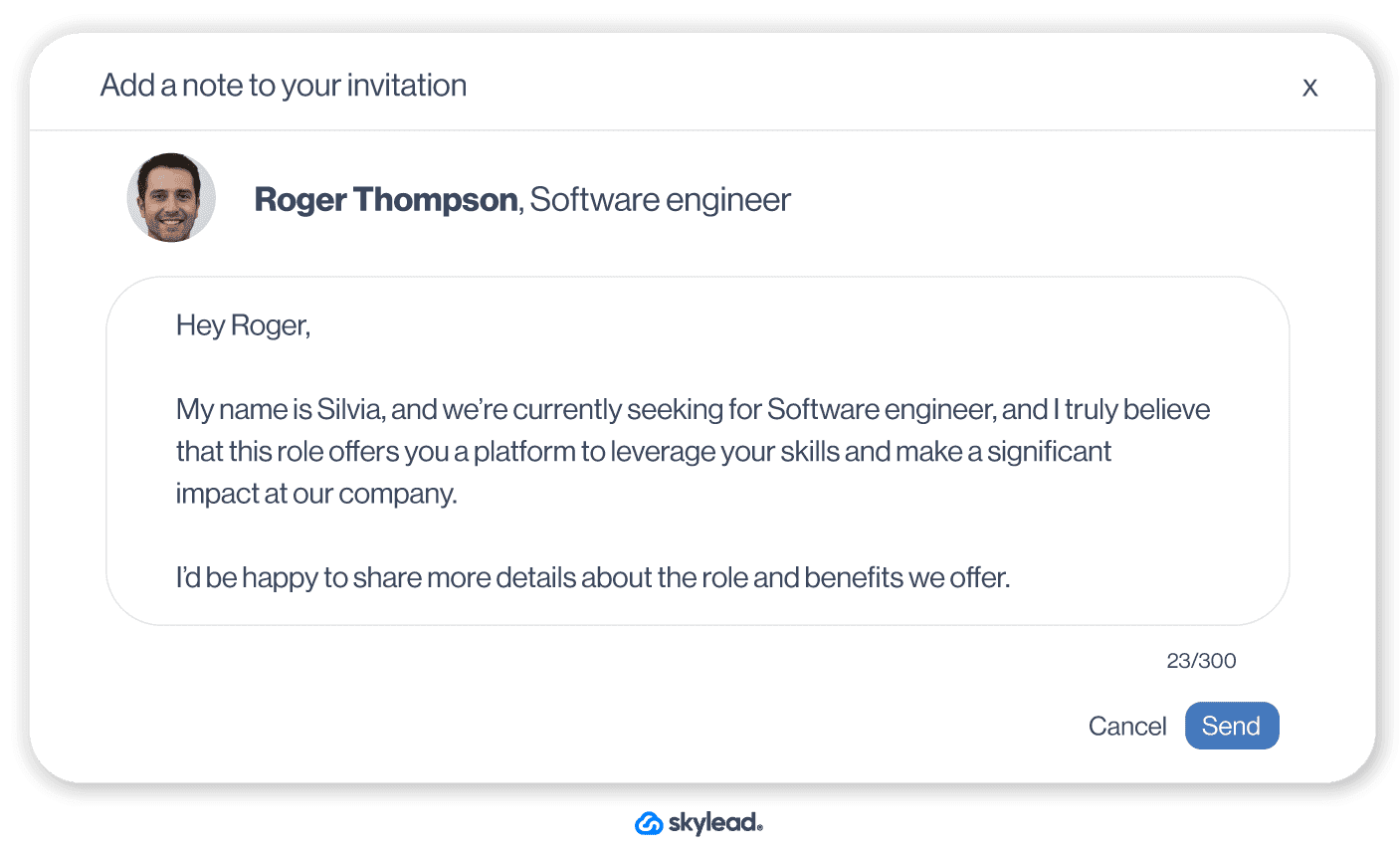
These ten patterns cover almost every situation you will hit in cold outreach. Use the bracketed placeholders as cues for what to personalise, not as words to keep in the final message.
1. Observation-based
"Saw your post on multi-channel outreach on LinkedIn and you are spot on when you say it is one of the most crucial steps in sales."
Why it works: proves you actually read something the prospect published, in the past 14 days ideally.
2. Compliment-based
"Your podcast on [topic] was fantastic. The part about [specific section] got me thinking about [XYZ]."
Why it works: positive psychology, but only when the compliment names a specific moment. "Love your content" reads as flattery.
3. Educational stat
"Integrating AI in sales strategies can lead to a [XX]% increase in close rates. That is huge."
Why it works: the stat earns curiosity. Pair it with one sentence on how you discovered or applied it.
4. Problem call-out
"I noticed in your quarterly report that lead conversion has been a challenge. It is a common issue many companies in [their industry] face."
Why it works: you are surfacing the gap they already feel, which is exactly what Tyler Cook's relevance-check stage is screening for.
5. New initiative
"Congrats on the launch of [product or hire]. The angle on [specific feature] is the kind of move that usually triggers [common downstream challenge]."
Why it works: signals you track the company, not just the contact form.
6. Ex-customer or shared past
"I worked closely with Samantha when she was at ABC Corp, helping their team streamline their sales process."
Why it works: ties you to a name the prospect trusts. Even a soft connection beats a cold introduction.
7. Achievement reference
"Congrats on your team's recent [award or milestone]. Achievements like these are not easy to come by in [industry]."
Why it works: must reference an event in the past 90 days, or the line lands stale.
8. CEO interview hook
"Just listened to [CEO]'s recent interview about prioritising data security. It is a huge concern across the industry."
Why it works: connects to leadership priorities. Mirrors Keith Weightman's "boss's vision" opener.
9. Pattern-interrupt admission
"This might be the only cold email you get today that admits it is cold."
Why it works: the honesty itself breaks pattern. Use sparingly. Once is funny, twice is a tic.
10. Trigger event
"Congrats on the Series A last week. Are you growing pipeline through outbound this quarter?"
Why it works: a funded round, a leadership change or a layoff all signal a moment where the recipient is shopping for solutions.
A bonus eleventh option for the bold: Josh Braun's specificity-led opener. "Looks like your team has 12 SDRs cold emailing Benefits Directors. With ACME, your reps can see which Benefits Directors searched for ALEX-related keywords in the last 24 hours." The named number plus the information gap make the reader want the rest of the sentence.
Audience-specific openers
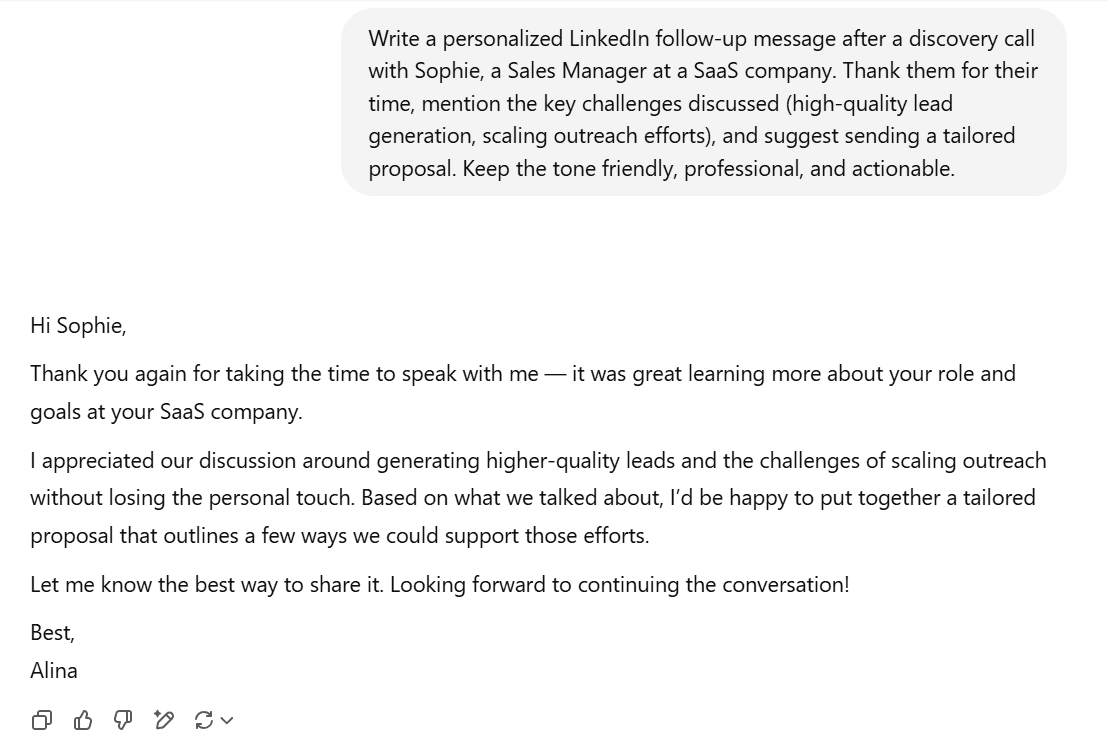
The same patterns above flex across audiences if you adjust the texture. Match the opener to who is reading.
| Audience | Opener angle | Example |
|---|---|---|
| Executives | Lead with promise of ROI in a fixed time | "In 7 minutes you will see why this drives $3M ROI." |
| Existing clients | Vivid visual of a future state | "Picture your Q3 roadmap cut in half. That is what this does." |
| Internal teams | Short story or shared history | "Two years ago we faced the same challenge you are in now." |
| Tech audiences | Data stat with a named persona | "42% of teams still deploy weekly with manual QA." |
| Peers | Empathy and shared experience | "I know how intimidating this feels. I have been there." |
The pattern: execs want the punchline, technical buyers want the data, and peers want the human signal. One template across all three flattens into noise.
The two-phase trap: subject line and opening line
The subject line and the opening line work as a single attention unit. The subject creates the curiosity gap, the opening line resolves enough of it to keep the reader scrolling. If they fight each other, the message bounces.
A two-phase structure that holds up:
- Subject: break the pattern with FOMO or a curiosity gap. Examples: "I think I broke something at [Company]..." or "Your competitors just did this, should you?"
- Hook: echo the subject curiosity in the first sentence so the reader knows the message is on-topic.
- Relevance proof: one short line that shows you know their world.
- Temptation: tease the outcome without giving away the punchline.
- Low-friction CTA: never a 30-minute meeting in the first message. Ask a yes-or-no question instead.
LinkedIn poll data backs the weight here: 34% of respondents rank the preview text (the first line) almost as important as the subject line itself, since it is the line they see in the inbox before opening.
Deliverability matters too. A subject line and opener tuned for replies still need to land in the primary tab. If the sending domain has thin authentication or a list peppered with bad addresses pushing the acceptable hard-bounce rate for cold email past 12 to 15 percent, Gmail and Outlook will park the whole campaign in spam before any human ever reads the first line.
LinkedIn vs cold email: same playbook, different lengths
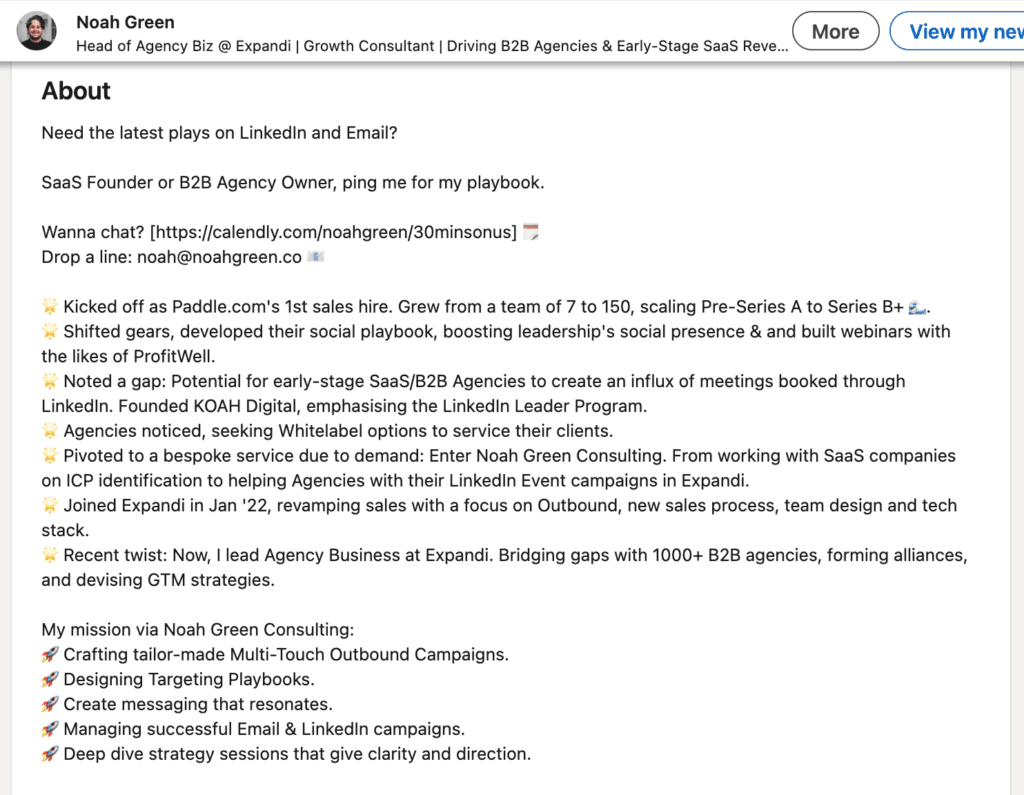
The principles port across both channels, but the ergonomics differ. Quick benchmarks for setting expectations:
- LinkedIn DMs achieve 20 to 25 percent open rates compared with typical cold email open rates.
- Initial LinkedIn messages perform best at 300 to 500 characters. Follow-ups can stretch to 1,000.
- Messages under 400 characters earn 22 percent higher response rates than longer pitches.
- Daily volume sweet spot on LinkedIn: 15 to 30 connection requests, not 150.
- Multi-channel sequencing (LinkedIn touch followed by an email touch) outperforms either channel alone.
- Three unanswered messages is the soft cap on follow-ups before the recipient starts to feel pursued.
The practical takeaway: the opener wording from the ten patterns above stays the same, but trim the message to half its email length when sending on LinkedIn. The platform punishes paragraphs.
Opening lines to avoid
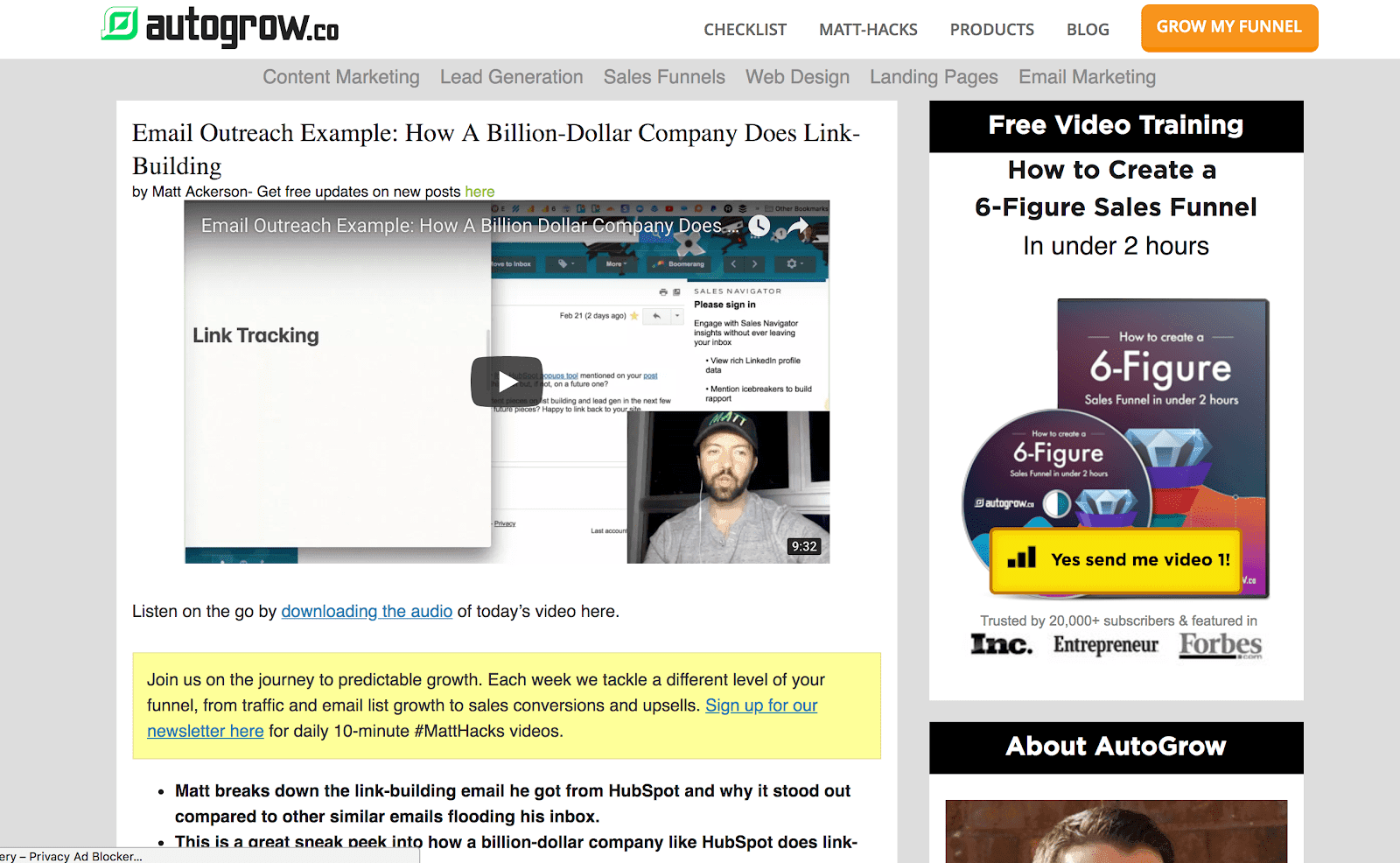
These phrases trigger what Mixmax calls the recipient's "mental spam filter" within the first second:
- "Hi my name is..."
- "Hope you are doing well" or "Hope this finds you well"
- "I am reaching out because..."
- "I know you are busy but..."
- "Haven't heard back from you..."
- "I help [X] with [Y]" or "We are a [Z] company"
The common thread: every one of those openings is about the sender, not the recipient. The reader's brain reaches the relevance-check stage, finds nothing about itself, and moves to the delete button.
The 10-point self-check before you hit send
Harinie Sekaran's checklist is the cleanest gut-test for an opener. Run a draft against these ten questions and rewrite anything that fails:
- Would I reply to this if I had zero context about the sender?
- Is the opener about me or about them?
- Can I say the same thing in half the words?
- Am I asking for too much too soon?
- Do I sound like a template?
- Does the message surface the gap between current and ideal state?
- Have I earned the right to pitch yet?
- Is this hyper-relevant to a specific ICP?
- Would this work if I sent it to a direct competitor? If yes, it is too generic.
- What would make me actually respond?
The question that catches most templates is number 9. If swapping the company name and industry keeps the message coherent, the opener has not done its job.
One last layer that often gets skipped: the address list itself. A perfectly crafted opener still loses to a bad email address. Scrub the list with a bulk email verifier before the first send so the only bounces left are addresses that genuinely went stale, and pair that with the same care you would give to outreach pitch templates on the body of the email.
Quick answers about outreach opening lines
What is a good opening line for an outreach email?
A line that names a specific recent action by the recipient (a post, a launch, an award) and connects it to a gap they likely feel. Generic professional greetings like "Hope this finds you well" do the opposite, they signal the rest of the email is a template.
How do I start an outreach email so it gets read?
Use one of the ten patterns above (observation, compliment, problem call-out, trigger event, etc.) and keep the first sentence under 25 words. Lead with relevance to the reader, not your name or company.
What is the 5-3-2 rule on LinkedIn?
A content mix guideline: for every 10 posts, share 5 pieces of curated industry content, 3 of your own, and 2 personal. It is a content rule, not an outreach rule, but it shapes the sender reputation that determines whether your messages feel like spam or signal.
What is the 3-2-1 rule on LinkedIn?
A formula for post writing: 3 candidate hooks (pick the strongest), 2 immediately useful insights, 1 clear call to action. The same shape works inside an outreach DM if the prospect lands on your profile after the opener earns the click.
§ Before your next send
Find the addresses that will bounce
Verify a single address free, or upload a CSV — the free plan includes 50 checks a month, no card needed.

BounceCheck Team
The team behind BounceCheck - helping businesses verify emails and improve deliverability.