What Is a Honeypot Email Address? A Complete Guide for Marketers
 BounceCheck Team
Maintaining a healthy email list is essential for ensuring your campaigns reach the right inboxes. But there's an invisible threat that could be lurking in your list: the honeypot email address. This cybersecurity trap can quietly damage your deliverability, hurt your sender reputation, and even get your IP blacklisted.
Honeypots are a specific flavor of spam trap — the kind created from scratch by anti-spam organizations rather than recycled from old mailboxes. This guide focuses on what makes honeypots different from other traps, the real-world forms they take in the wild, and the narrow set of defenses that matter most. For the broader landscape of all three spam trap types and a complete prevention checklist, see our overview of spam traps.
What is a honeypot email address?
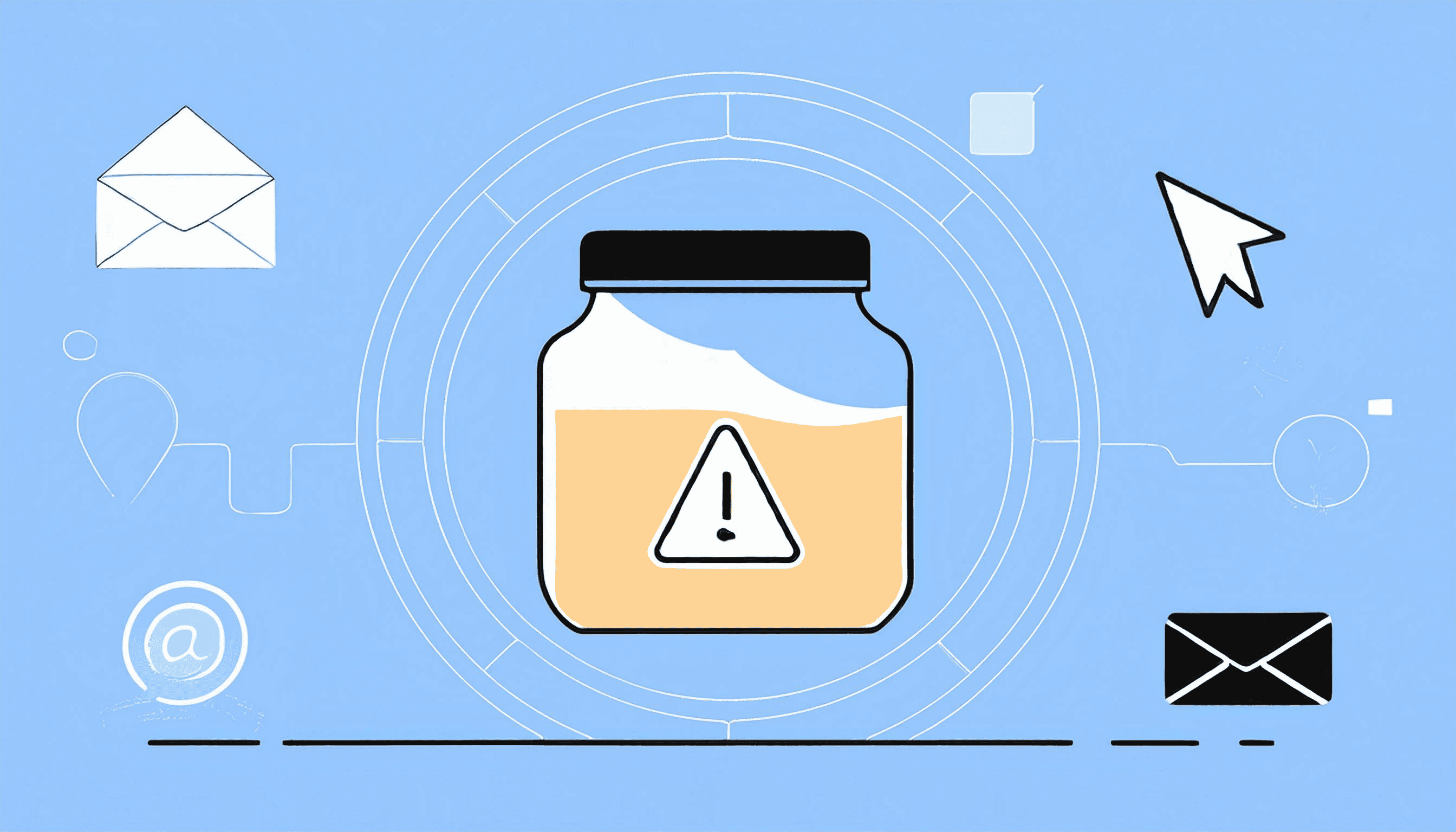
A honeypot email address is a bait email account, specifically set up to catch spammers. Cybersecurity experts and anti-spam organizations create these fake accounts to attract unsolicited messages, allowing them to study spammer behavior and strengthen security measures.
The term "honeypot" has long been used to describe strategies that use bait to lure someone or something into a trap. In cybersecurity, the bait is a digital asset, server, or email address that appears tantalizingly unsecured. Criminals seeking sensitive data and access to systems simply can't resist the opportunity to venture into the decoy.
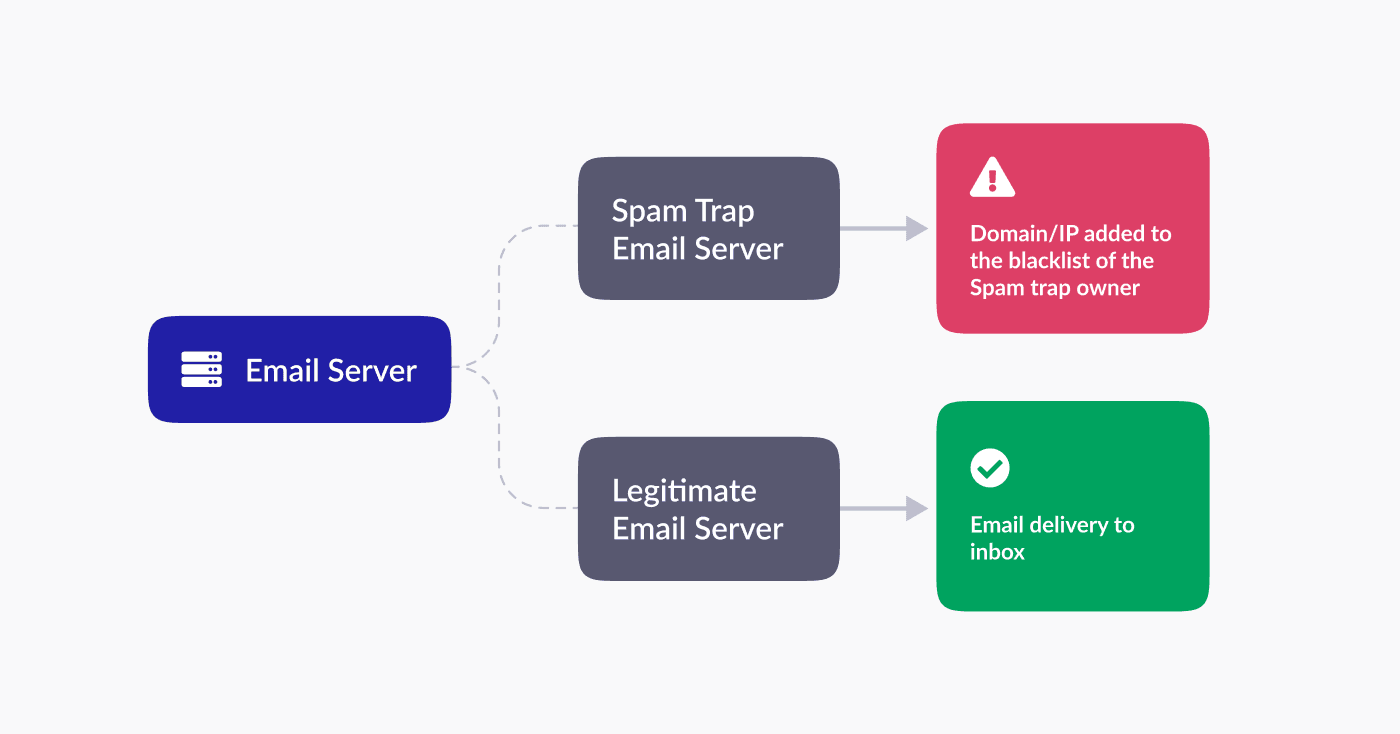
While this is a beneficial practice for combating cybercrime, it poses significant risks to legitimate email marketers. Sending an email to a honeypot address can result in your messages being flagged as spam, impacting deliverability and possibly leading to IP blacklisting.
The cybersecurity origin behind email honeypots
The purpose of any honeypot trap is to entice nefarious people into accessing a controlled environment. This gives experts the chance to observe criminals' methods, identify weaknesses in their systems, plan for future threats, and boost security protocols.
Honeypots also derail criminals from their other nefarious tasks. Any amount of time a criminal spends in a honeypot is time they aren't threatening the actual system. Email honeypots — dummy mailboxes that collect malicious messages — are one slice of a broader family that also covers research traps, production traps, database decoys, and malware lures. For email marketers, only the email honeypot variant matters, and it is functionally identical to what blocklist operators call a pristine spam trap.
Pristine honeypot vs recycled spam trap: the crucial distinction
Anti-spam circles split traps into pristine (a true honeypot, never owned by a real person) and recycled (an abandoned real mailbox reactivated as a trap). The difference matters because the two reach your list through different channels and trigger different penalties.
| Feature | Pristine honeypot | Recycled spam trap |
|---|---|---|
| Origin | Created from scratch by anti-spam orgs (Spamhaus, Validity, Project Honey Pot) | Real mailbox abandoned, then reactivated as a trap by the provider |
| Ever owned by a real person? | Never | Yes, at one point |
| How it lands on your list | Scraping, purchased lists, bot signups without CAPTCHA | Failing to suppress hard bounces and dormant subscribers |
| Typical placement | Hidden in HTML, planted in forums, embedded in directories | Same address that used to receive your real campaigns |
| Penalty severity | One hit can blocklist you immediately | Gradual reputation decline, then filtering |
| Signal to ISPs | You acquired data through illegitimate means | You don't maintain your list |
Real-world examples of honeypots in the wild
Project Honey Pot's distributed network. Project Honey Pot publishes harvester-bait email addresses across millions of partner websites. The addresses are dynamic, generated per visitor, and tied to the IP that scraped them. When a marketer later sends to one of these addresses, the project knows exactly which scraper's IP harvested the data and can hand the evidence to blocklist operators.
Spamhaus seed traps. Spamhaus and similar operators register fresh domains and seed mailboxes that have never been published anywhere a real person could plausibly find them. The only way these addresses enter a sender's database is if the sender bought them from a broker who acquired them through illicit means. A single hit usually triggers an SBL listing.
Embedded in invisible HTML. Anti-spam projects often hide bait addresses in display: none page elements on partner sites. Human visitors never see them. Email scrapers that read raw HTML grab them anyway. Any sender whose campaign reaches one of these addresses has, by definition, bought or scraped data.
Typo-domain honeypots. Operators register misspellings of major providers (gnail.com, yaho.com, hotmal.com) and monitor incoming mail. The trap fires whenever a marketer accepts subscriber typos at signup without validation.
Internal abandoned addresses. Large companies sometimes "graduate" old internal aliases — the former CEO's address, an old press@ mailbox — into honeypots that flag senders still mailing dormant contacts. These straddle the line between pristine and recycled.
How honeypot emails work step by step
- Creation of the honeypot email address: Cybersecurity experts create an email address that looks legitimate but is designed to act as a trap for spammers.
- Distribution of the honeypot: The address is strategically placed where spammers or less scrupulous marketers might find it, such as in forums, websites, or hidden in the HTML code of webpages.
- Email sent to honeypot: When an email marketer or spammer sends an email to the honeypot address, the trap is activated.
- Data collection: The system automatically records incoming data including IP addresses, email headers, content, and sending patterns.
- Analysis: Cybersecurity professionals analyze the collected data to understand the tactics and techniques used by the sender.
- Spam filter update: Information derived from the analysis is used to update spam filters and improve email security measures.
- Blacklisting or flagging: Depending on severity and intent, the sender's IP address could be blacklisted, causing emails from that source to be marked as spam or blocked entirely.
- Ongoing monitoring: Honeypots remain active, continuing to collect data on new threats and tactics, contributing to a cycle of ever-improving email security.
How do honeypots end up on your list?
Even if you're vigilant about responsible email marketing, honeypot emails can still find their way onto your list. Here's how that happens:
Bought email lists: Some marketers, despite advice to the contrary, purchase lists to fast-track audience growth. This is the most common path. Pristine honeypots are designed to live where data brokers harvest, so a purchased list almost always contains them.
Scraped email addresses: If you're using a list scraped from various websites, there's a high likelihood it contains honeypot emails. Anti-spam organizations place these on websites specifically as traps for unethical marketers.
Accidental typos at signup: A subscriber meant gmail.com but typed gnail.com. Without real-time validation on your form, the typo-domain honeypot lands quietly on your list.
Competitive sabotage: Business rivals can deliberately add honeypot emails to your list through your public signup forms to harm your deliverability.
Bot submissions: Forms without CAPTCHA invite bots that fabricate plausible-looking addresses, and those fabrications often match real honeypots already planted by anti-spam projects.
What a honeypot hit costs you
Hitting a pristine honeypot is the most damaging single event in email marketing. One strike on a Spamhaus-monitored honeypot can result in immediate SBL listing, after which Gmail, Outlook, Yahoo, and most corporate mail filters reject your messages outright. Even outside the blocklist scenario, honeypot hits drag down sender reputation, lift your email bounce rate, and route otherwise-legitimate campaigns to spam folders.
For a complete breakdown of how each trap type affects reputation, inbox placement, and revenue across recovery scenarios, see the full spam trap impact analysis.
Benefits and weaknesses of honeypots
While honeypots create headaches for unsuspecting marketers, they offer real benefits to cybersecurity teams:
- Low cost: Honeypots are designed to work almost autonomously, and the software is often open source.
- Stop insider threats: Honeypots help address internal risks before they become full-on disasters.
- Keep up with the latest evolutions: Cybercriminals constantly refine their tactics, and honeypots enable defenders to spot these updates and proactively find defenses.
- Lower chance of misidentification: Honeypots generally can't be accessed by regular customers and employees, ensuring that only criminals are ensnared.
- Secure your emails: They help spot malware and other email-based dangers, allowing you to improve security and train your employees.
Of course, every cybersecurity tool has limitations:
- Can be easy to spot: Experienced criminals look for tell-tale signs, and honeypot detectors give them better chances of identifying a trap.
- Might compromise your security: A talented criminal could potentially gain access through the trap if it isn't truly isolated from your main system.
- Can be used as a distraction: A criminal might use decoy activity within the honeypot to conceal an actual attack on the organization.
- Can cause issues for your email marketing: Your sender reputation could be damaged if a spam bot enters a honeypot address into your signup form and you then attempt to send messages to it. Even benign cases like a real user mistyping their address produce the same result.
Honeypot-specific defenses
Because honeypots are the pristine trap variant, the defenses that matter most target acquisition quality rather than list-aging. The top three:
- Never buy or rent lists. This single rule eliminates the bulk of honeypot exposure. Brokers harvest data from exactly the places honeypots are planted.
- Validate at signup, not after. Real-time email verification on your forms catches typo-domain honeypots and disposable addresses before they enter your database. Pair with a CAPTCHA or invisible honeypot form field to block bot submissions.
- Use double opt-in. A confirmation click proves the address belongs to a real human who wants your mail. Bots and harvester scripts don't complete the loop.
For the full ten-item prevention checklist that also covers recycled-trap and typo-trap defenses, refer back to the main spam trap guide. A reliable list-cleaning service such as BounceCheck rounds out the routine on existing lists.
Final word on honeypots
Honeypots are the high-stakes corner of the spam-trap world. They aren't created by accident, they aren't easy to spot, and one wrong send can take weeks to recover from. The good news is that the path to honeypot exposure is narrow: buy data, scrape data, or skip validation. Close those three doors and the entire pristine-trap category stops being a meaningful risk.
For senders who built their list the right way, honeypots are mostly a story you read about. For senders who didn't, they're the single most expensive lesson email marketing can teach.
Quick Honeypot Questions
Is a honeypot the same as a spam trap?
A honeypot is one specific kind of spam trap — the pristine variant, created from scratch and never tied to a real person. Recycled spam traps (abandoned real mailboxes) and typo-domain traps are separate categories. The terms get used interchangeably in casual writing, but in technical blocklist language, honeypot equals pristine trap.
Can one honeypot hit really get me blocklisted?
Yes. A single hit on a Spamhaus-monitored pristine honeypot can trigger an SBL listing within hours. Recycled and typo traps usually require repeated hits to trigger action, but pristine honeypots are designed for one-strike enforcement because their presence on your list is itself evidence of illegitimate data acquisition.
How do I find honeypots already on my list?
You can't identify them by inspection — they look like normal addresses. The practical approach is to run your list through a verification service that maintains a known-trap database, suppress addresses that never open or click across many campaigns, and audit any segment acquired through paid lists or third-party imports.
Are competitors planting honeypots on my list a real concern?
It happens, though rarely. A more common form of sabotage is competitors submitting their own role addresses ([email protected]) through your signup form, then complaining when they receive mail. CAPTCHA and double opt-in defeat both vectors.
What's the difference between a honeypot and a feedback loop?
A honeypot has no real recipient and silently records the sender. A feedback loop (FBL) is a mechanism mailbox providers like Yahoo or Microsoft use to tell senders when a real user marked their message as spam. Both inform sender reputation, but honeypots flag list-acquisition problems while FBL signals flag content or frequency problems.

BounceCheck Team
The team behind BounceCheck - helping businesses verify emails and improve deliverability.