What Is Email Enumeration? How Attackers Probe for Valid Addresses
 BounceCheck Team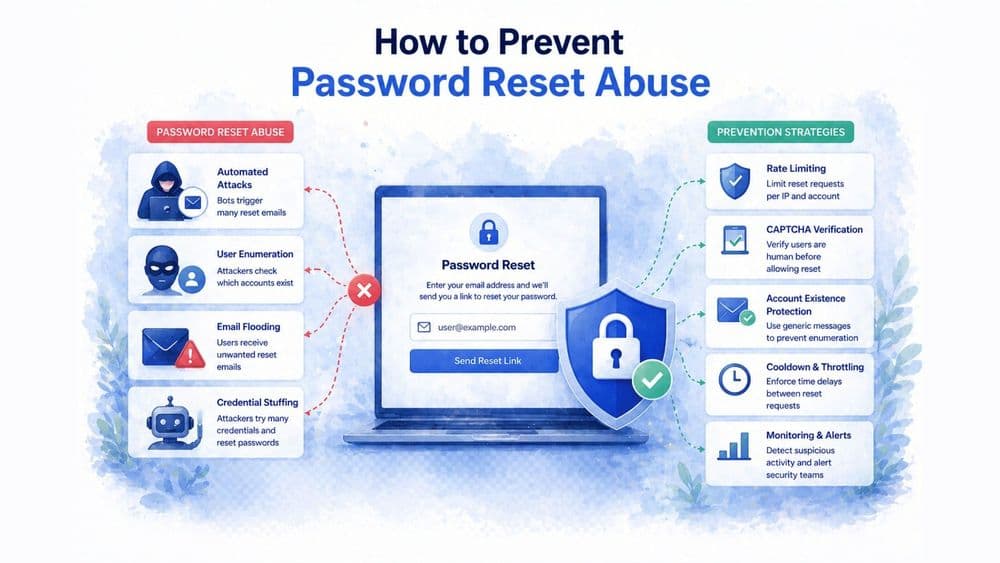
Before a phishing campaign lands or a credential-stuffing wave hits, an attacker usually wants one simple piece of information: which email addresses on your domain are real. That confirmation is the job of email enumeration. It is not a single exploit so much as a category of reconnaissance, and the techniques behind it have stayed remarkably stable while authentication systems have moved on around them. This guide walks through what email enumeration is, the half-dozen ways it gets carried out in practice, why mailbox providers and identity platforms treat it as a security problem worth blocking, and how Google's Identity Platform now turns the protection on by default for new projects.
The short answer: what email enumeration is
In cybersecurity terms, email enumeration is a technique an attacker uses to discover valid email addresses associated with a specific domain or organization. Google's own documentation frames it as a type of brute-force attack in which a malicious actor attempts to guess or confirm users in a system by passing an email address to the API and checking the response. The attack does not break authentication on its own. It exploits the fact that most signup, login, and password-reset flows respond differently for an address that exists than for one that does not. Once an attacker can tell those two cases apart at scale, they have a verified list of real targets, which is what every downstream attack needs.
It is, in other words, the reconnaissance step. The signal is small per request and devastating once aggregated.
How email enumeration works in practice
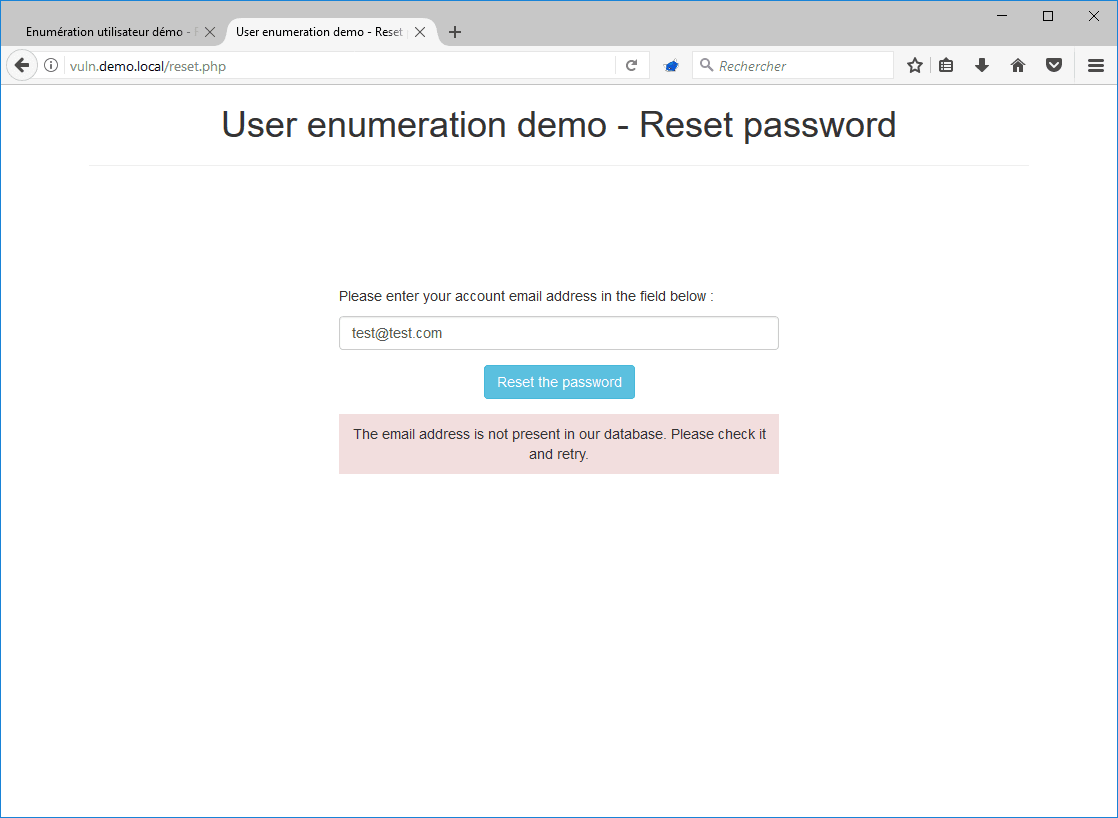
The mechanics are mostly about reading server responses for subtle leaks. A handful of vectors come up over and over.
Login form responses
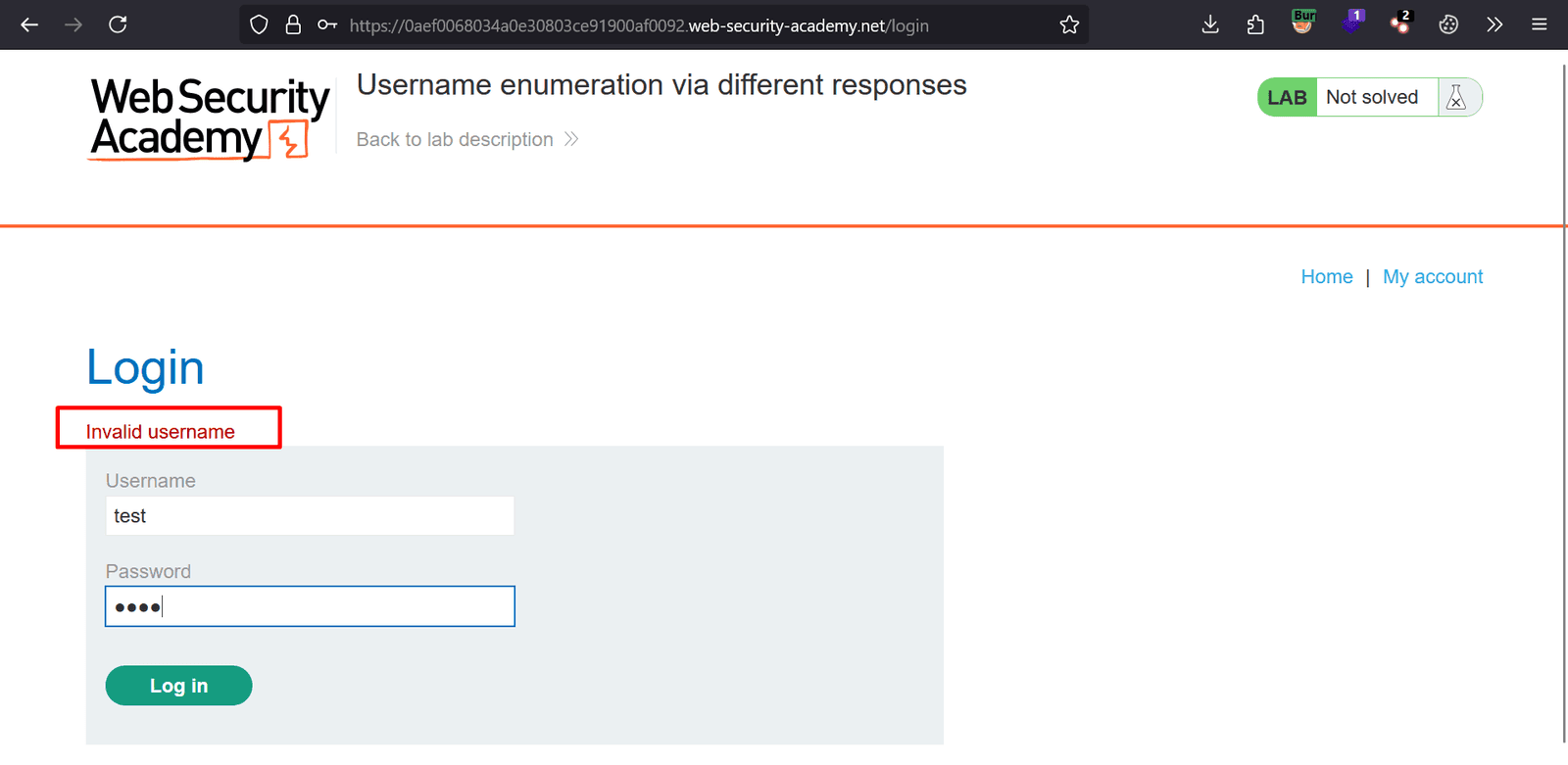
Many login forms return one error when the address does not exist ("Email not found") and a different error when the address exists but the password is wrong ("Incorrect password"). That single distinction lets an attacker decide which addresses are worth attacking further, without ever guessing a password.
Password reset endpoints
Reset flows leak the same way. An invalid address gets "Email not found," while a registered address gets "If this email exists, a reset link has been sent." Two responses, two outcomes, and the existence of the account is confirmed.
Account registration feedback
Signup forms that block registration with "This email is already taken" confirm exactly what the attacker was probing for. Identity Platform's pre-protection behaviour was the textbook case: a missing address returned EMAIL_NOT_FOUND, a registered address returned EMAIL_EXISTS, and the gap between the two responses was the whole attack.
SMTP probing
When the target is an email server rather than a web application, attackers go straight to SMTP. Commands like VRFY, EXPN, and RCPT TO ask the server whether a given mailbox exists. A 250 OK confirms it, a 550 No such user denies it, and well-meaning verbose error messages turn the server into an enumeration oracle. The same conversation the pillar guide on how email verification works describes from a deliverability angle is what attackers ride in reverse.
Timing attacks
Even when error text is uniform, server response times often are not. Hashing a password and comparing it against a stored record takes longer than rejecting an address that does not exist at all. Repeatable timing deltas, measured over enough samples, leak the same existence signal that the error string used to.
OSINT and format guessing
Attackers do not have to start cold. Public sources (LinkedIn profiles, conference attendee lists, breach dumps, archived pages on the Wayback Machine) yield raw addresses to test. Many organizations use predictable formats like [email protected], so once a few employees are confirmed, the rest of the company's directory can be guessed and verified one address at a time.
Why providers treat this as a security issue
Enumeration on its own does not log into accounts or read mail. It just builds the target list every later step depends on. That is exactly why mailbox providers, identity vendors, and security teams treat it as a control gap worth closing:
- Phishing and social engineering become far more effective when an attacker knows which addresses are live. Targeted messages aimed at confirmed accounts convert better than blast campaigns.
- Credential stuffing and brute-force attacks ride on enumerated lists. Once an attacker has a verified address, they can replay passwords leaked from unrelated breaches against your login page.
- Account takeover (ATO) is the natural finish. Confirm the address, find a reused or guessable password, and the account is theirs.
- Business email compromise (BEC) scams need real executive addresses to impersonate. Enumeration is what turns a guess into a working spoof target.
- Spam and malware distribution treat enumerated addresses as fresh inventory, especially at addresses that have never appeared on public spam lists.
Google's documentation calls out the same chain explicitly: email enumeration enables credential-stuffing and targeted phishing, which is why Identity Platform now ships protection on by default.
How platforms block enumeration
The defenses are not exotic. They are mostly about removing the differential signal an attacker is looking for. A mature stack combines several of them at once:
- Generic error messages that read the same way for valid and invalid addresses. "If an account is associated with that email, a reset link has been sent" works for both cases and reveals nothing.
- Rate limiting on login, signup, and password-reset endpoints, scoped per IP and per account. Enumeration relies on volume, and a hard cap is the cheapest defense to deploy.
- CAPTCHA or invisible bot detection on the same endpoints. Most enumeration is automated, so a working human check stops it cold.
- Obscured SMTP responses that return the same generic error whether the mailbox exists or not. Disabling
VRFYandEXPNand keepingRCPT TOambiguous removes the SMTP oracle. - Randomized response times that add small artificial delays to invalid lookups, neutralizing timing attacks.
- Multi-factor authentication as the last line of defense. Even when an address is enumerated and a password leaks, MFA stops the account takeover that the whole campaign was built to enable.
- Server-side monitoring of login and reset attempts for the burst patterns enumeration creates, with automatic blocks for the IPs running them.
None of these alone closes the attack, but layered together they make the cost of enumeration high enough that attackers move on.
Inside Google's email enumeration protection
Google Identity Platform's email enumeration protection is a good worked example of what a serious defense looks like, because it changes several response behaviours at once. Projects created on or after September 15, 2023 have it enabled by default. With the feature on, the platform's behaviour shifts in ways worth knowing about, especially for teams considering whether to keep it on.
The most visible change is the sign-in error itself. Invalid sign-ins return a generic INVALID_LOGIN_CREDENTIALS instead of EMAIL_NOT_FOUND, so an attacker can no longer separate a missing account from a wrong password by reading the response. Sign-up still returns EMAIL_EXISTS for collisions, but Google recommends layering App Check and reCAPTCHA Enterprise on the signup endpoint to keep that one channel from being abused.
Protection also closes a set of supporting APIs that were enumeration-friendly. fetchSignInMethodsForEmail and fetchSignInForEmail stop returning a list of sign-in methods for a given address, which used to be a clean way to confirm registration. Changing a user's email now requires verifying the new address first, so attackers cannot use email-change flows to confirm whether a target address is already in the system. Error responses on verification-email and password-reset send flows are masked: a reset email is sent only if the address exists, and an email-change verification is sent only if it does not, but the response does not say which case happened.
The trade-off is real. Some legacy flows break, particularly anything that depended on knowing whether an email was already linked. Google's own recommendation is to leave protection on and migrate the broken flows, since the alternative is leaking enumeration signal on every authenticated endpoint a project exposes.
Closing thoughts
Email enumeration is the quiet step that makes the louder attacks viable. Phishing campaigns, credential stuffing, BEC, account takeover, all of them work better when the attacker knows in advance which addresses on your domain are real, and enumeration is how they find out. The defenses are equally well understood: uniform error messages, rate limits, CAPTCHA, SMTP hardening, MFA, and consistent response times across valid and invalid cases. Treating enumeration as a first-class control gap (not just a quirk of error messaging) is what separates platforms that get probed once from platforms that get probed continuously.

BounceCheck Team
The team behind BounceCheck - helping businesses verify emails and improve deliverability.