Free Email Verification: How to Verify Email Addresses for Free
 BounceCheck Team
Yes, you can verify email addresses for free. Free email verification confirms whether an address is real and able to receive mail, without sending it a message or paying for a subscription. Most reputable services offer a free tier: unlimited single-address checks, plus a capped batch of bulk verifications (commonly around 100) before you pay. The free tier handles spot checks and small lists well, while large lists and automated, in-app verification are where paid plans take over.
What is email verification?
Email verification is the process that confirms the validity and deliverability of an email address. It checks whether the address is correctly formatted, whether the domain can receive mail, and whether the individual mailbox actually exists. Businesses rely on it to keep sign-up forms and mailing lists clean, cut down on bounces, and protect their sender reputation with email providers.
A bounce is a message that cannot be delivered to the recipient. Bounces fall into soft bounces, which are temporary (a full mailbox, for example), and hard bounces, which are permanent failures such as an address that does not exist. Sending repeatedly to invalid addresses damages your sender reputation, which can push future messages into spam folders or block them outright. Verifying addresses before you send removes the bad ones first, which is the core of how verification works.
What free email verification actually includes
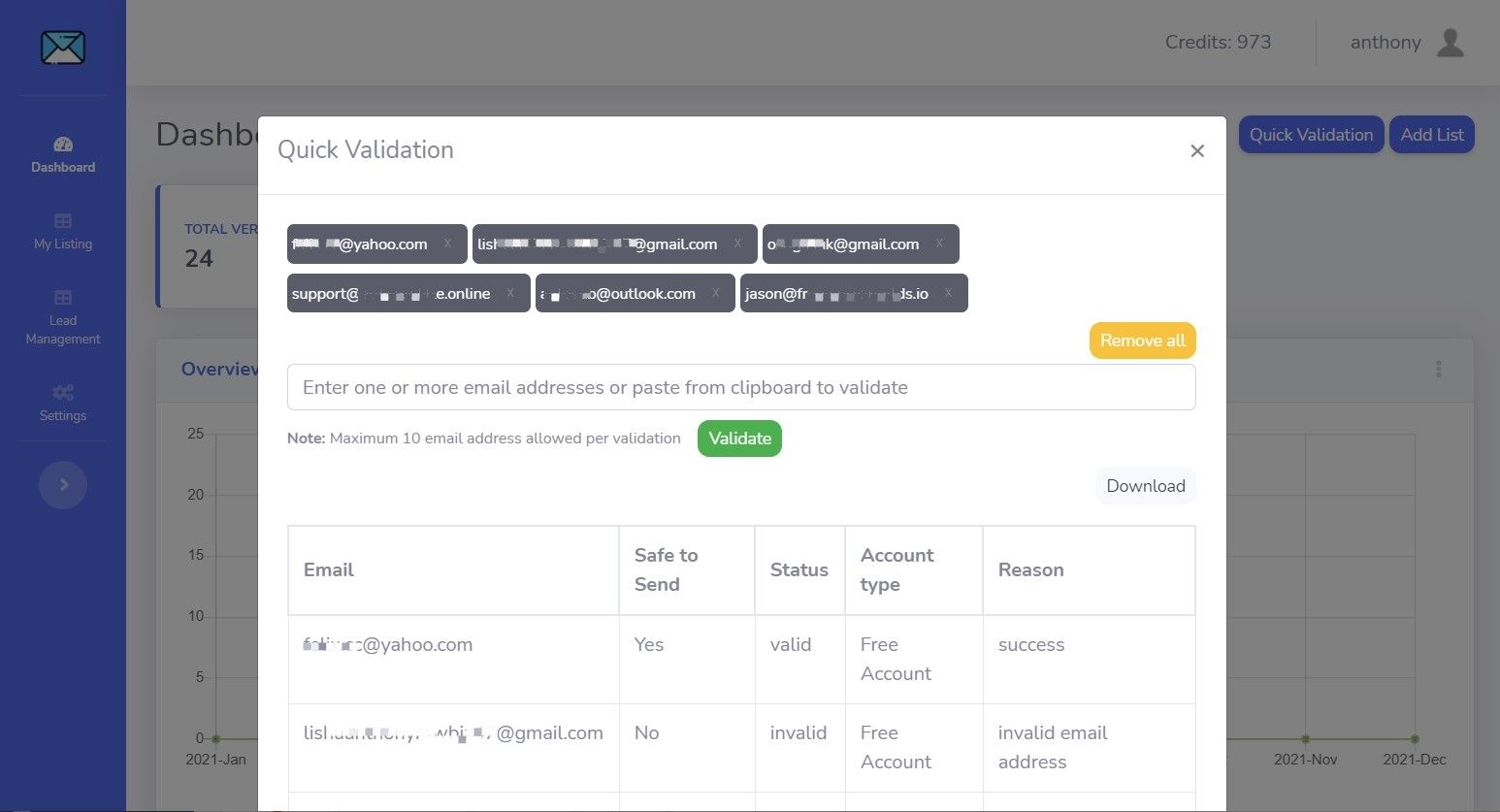
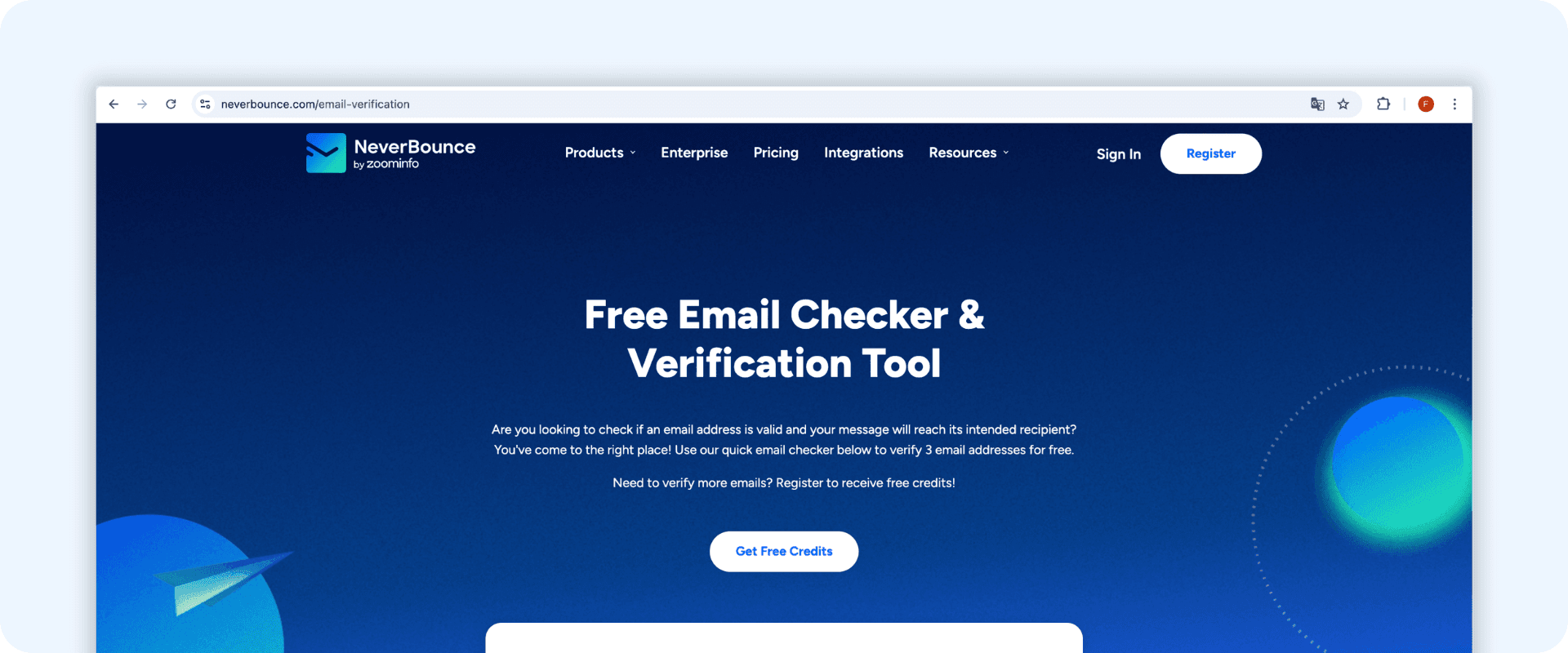
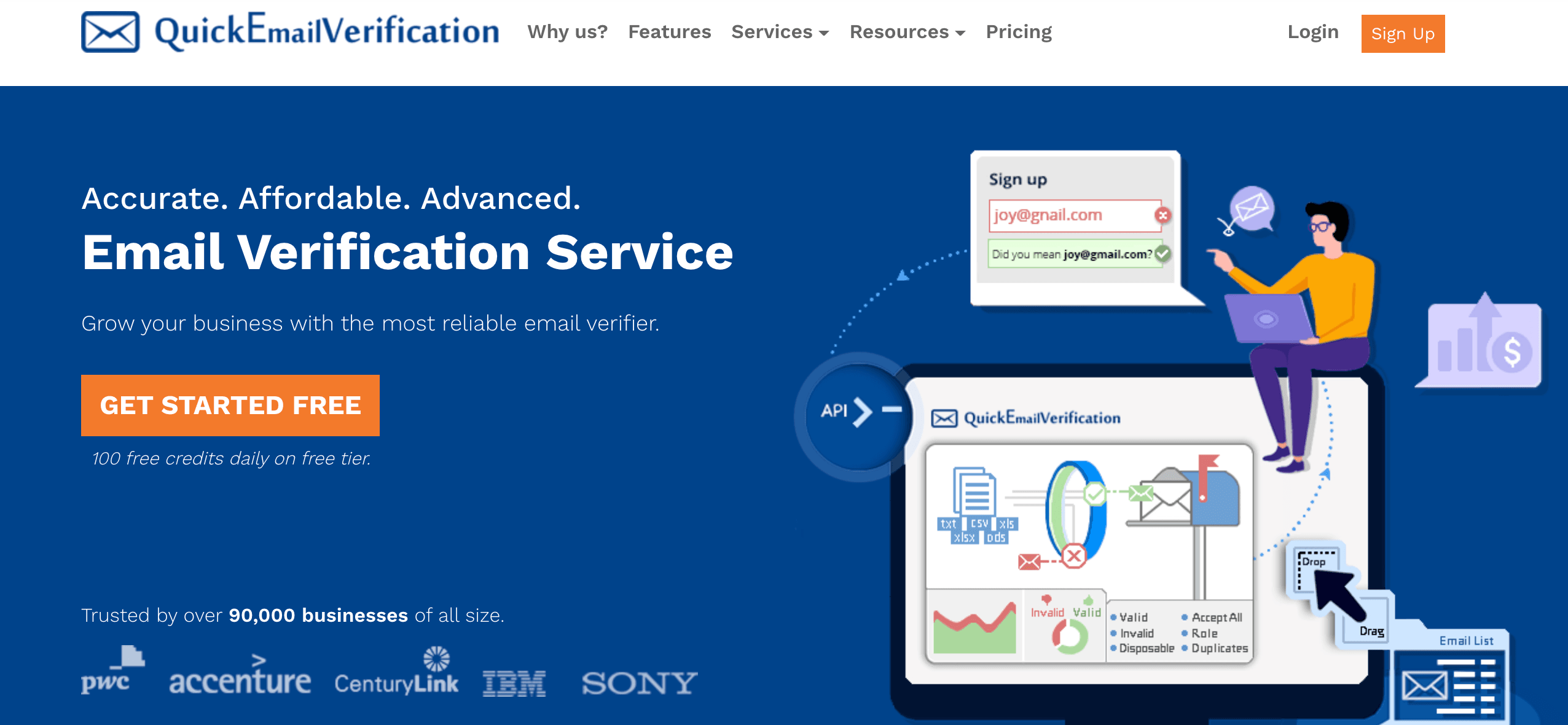
"Free" means different things at different services, so it pays to know what you get before signing up. Single-address checks are almost always free: you type one email into a web tool and get an instant result. Bulk verification, where you upload a whole list, is where free tiers cap out. A common pattern is a fixed allowance, often around 100 free verifications, after which you pay per address or per credit.
| Free option | Typical limit | Best for |
|---|---|---|
| Single-address web checker | One at a time, no cost | Spot-checking a new contact or form signup |
| Free bulk allowance | About 100 addresses, then paid | Cleaning a small list before a campaign |
| Free account plan | Around 100 verifications per month | Light, ongoing checks |
For anything larger than a few hundred addresses, the free allowance runs out quickly and a bulk verification service becomes the practical option.
What a free email verifier checks
A good free verifier does far more than look for an at sign. It runs each address through a sequence of checks:
- Syntax and format: confirms the address is shaped correctly, with no typos, stray spaces, or invalid characters.
- Gibberish detection: flags random strings like [email protected] that are unlikely to belong to a real person.
- Disposable address: checks whether the domain is used for temporary, throwaway inboxes.
- Webmail detection: notes whether the address uses a free provider such as Gmail or Yahoo.
- MX records: verifies the domain has mail-exchanger records, without which it cannot receive any email.
- SMTP server: confirms that a mail server listed in the MX records is reachable.
- Mailbox check: connects to that server to see whether it will accept mail for the address.
- Catch-all domain: detects domains set to accept every address, which makes any single result less certain (see catch-all domains).
The most thorough services chain dozens of these steps together. Verifalia, for example, describes a process of more than 30 steps covering syntax, DNS, disposable detection, and SMTP diagnostics.
Email validation vs verification
The two terms travel together, but they describe different depths of checking. Validation looks at format only: it confirms the address follows the syntax rules ([email protected], not [email protected]) and contains no obvious typos. It does not confirm the address exists. Verification goes a step further and checks deliverability, connecting to the mail server to confirm the mailbox is active. In short, validation checks that an address looks correct, while verification checks that it actually exists. Free tools usually do both, and the verification step is what makes a result worth trusting.
How free verification works without sending an email
A common worry is that checking an address will email the person and tip them off. Reputable verifiers avoid this. Instead of sending a message and waiting for a bounce, they connect to the recipient's mail server and run the same handshake an incoming email would, then stop before anything is delivered. The mailbox owner never receives a message. This is why you can verify an address without sending anything, even one you have never contacted.
Where free email verification falls short
Free verification is genuinely useful, but it has limits worth understanding before you lean on it:
- Volume caps: free tiers cover single checks and small batches; large lists need a paid plan.
- Uncertain results on some servers: not every mail server responds honestly, so some addresses come back as unknown or risky rather than a clean yes or no.
- Catch-all domains: a domain that accepts every address cannot be confirmed at the mailbox level, so the result stays ambiguous.
- No guarantee against every bounce: even an address marked valid can still bounce, because mailbox existence is only one factor in deliverability. Quality services report bounce rates under 1% on valid results, not zero.
Knowing these limits keeps expectations realistic: a free check sharply reduces bad addresses, but it does not promise perfect delivery.
When to move beyond free tools
The free tier is fine for spot checks and small, occasional lists. You start to outgrow it when:
- You need to clean a list of more than a few hundred addresses at once.
- You want verification built into a sign-up form so bad addresses are caught as users type.
- You want checks inside your own software through an API.
- You verify regularly and the monthly free allowance no longer covers it.
At that point a paid bulk service or an API plan pays for itself by protecting deliverability across every campaign. The choice often comes down to volume and where the checks happen, whether real-time or bulk. BounceCheck is an email verification service that checks each address for syntax, mail-record, and mailbox validity, and it handles both single checks and bulk list cleaning for teams that have outgrown a free allowance.
Keeping your list clean and free
Verification is not a one-time job. Email addresses change constantly as people switch jobs and abandon inboxes, so a list that was clean last quarter will have decayed. A practical rhythm is to re-check large lists (over 10,000 addresses) about every two weeks and smaller lists monthly, using free single checks for new contacts as they arrive and a bounce checker before each major send. Pairing free verification with steady list habits keeps bounces low without adding cost.
Quick answers
Is email verification really free?
Yes, for single addresses. Almost every reputable verifier lets you check one email at a time at no cost, and most include a free allowance for bulk verification (often around 100 addresses) before charging.
Can I verify a Gmail or Yahoo address for free?
Yes. Free verifiers detect webmail providers like Gmail and Yahoo and check the mailbox the same way they check any other address, confirming the format, the domain's mail records, and whether the inbox accepts mail.
Does verifying an email send a message to that person?
No. Reputable tools connect to the mail server to confirm the mailbox exists but stop before any email is delivered, so the recipient never knows the address was checked.
How accurate is free email verification?
Accurate enough to remove most invalid addresses, with valid results typically bouncing less than 1% of the time. It cannot guarantee zero bounces, because mailbox existence is only one part of deliverability, and catch-all domains can return uncertain results.
How often should I verify my list?
Re-check large lists roughly every two weeks and smaller lists monthly, since addresses go stale over time. Verify new contacts as they sign up and run a bulk check before each significant campaign.

BounceCheck Team
The team behind BounceCheck - helping businesses verify emails and improve deliverability.