Why Do Verified Emails Still Bounce? The Real Causes
Before your next send Find the addresses that will bounce.
Verify an email freeWhy Do Verified Emails Still Bounce in 2026?
Updated July 2026
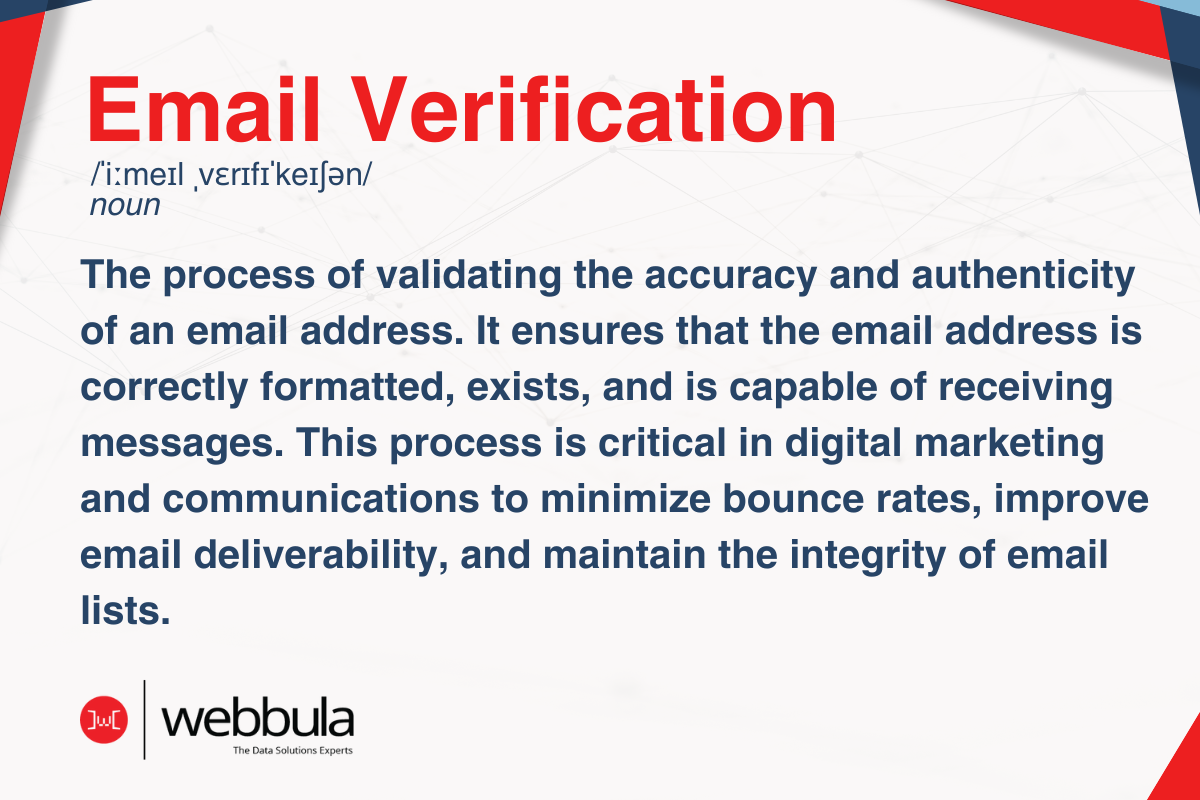
Email verification confirms an address was valid at the moment you checked it. It does not confirm the address will stay that way. A clean, verified list can still bounce weeks or months later because of accept-all (catch-all) servers, deleted mailboxes, greylisting, and sender reputation, and none of those decay mechanisms show up in the original check. Re-verifying on a schedule, not once, is what keeps a list under the roughly 2% bounce rate that deliverability benchmarks treat as healthy.
What email verification actually checks (and what it doesn't guarantee)
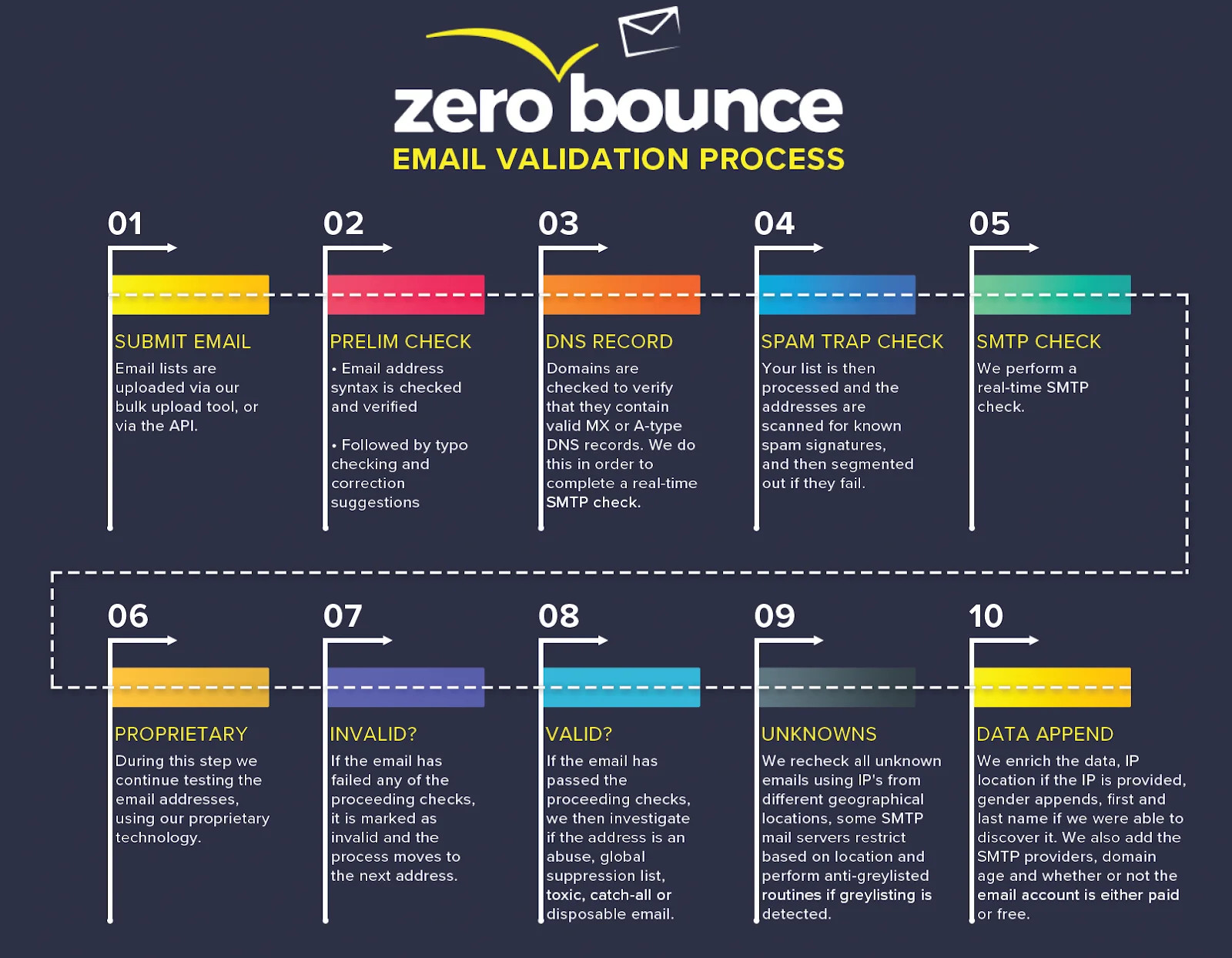
How email verification works comes down to a fixed sequence of checks against an address before you ever send to it: a syntax check, a domain and MX record lookup, an SMTP-level check against the mailbox itself, spam trap and blacklist screening, and a check for role-based addresses like info@ or support@. Together, these confirm that an address exists and was reachable right then. The difference between verification and validation matters here: verification confirms an address exists and was reachable, nothing about how long that will remain true.
What the checks can't tell you is whether the mailbox will still exist next month, whether the recipient's server will greylist your sending IP on a future attempt, or whether an accept-all domain quietly said yes to an address that was never real. As Reoon puts it, no email verifier on earth can guarantee zero bounces.
| Verification confirms | Verification can't guarantee |
|---|---|
| Address syntax is valid | The mailbox stays active next month |
| Domain has an MX record | The recipient's server won't greylist your IP later |
| Mailbox accepted the check at that moment | An accept-all domain was screening honestly |
| Address isn't a known spam trap | Your sender reputation stays clean |
Why verification is a snapshot, not a permanent guarantee
Every verification result is a timestamp, not a forecast. Hunter tracked a list of previously valid addresses and found that 2% became invalid within just four weeks, with no campaign sent in between to trigger the change. Mailboxes get deleted, domains get abandoned, and companies lose employees between the day you verify and the day you send.
Put plainly: verified does not mean guaranteed deliverable. It means the address was deliverable as of the check, nothing more. For a bulk sender running the same list every few weeks, that decay compounds. Leave a list unverified for a full quarter and a meaningful share of the addresses that passed in one month will have failed by the next.
The real reasons verified emails still bounce
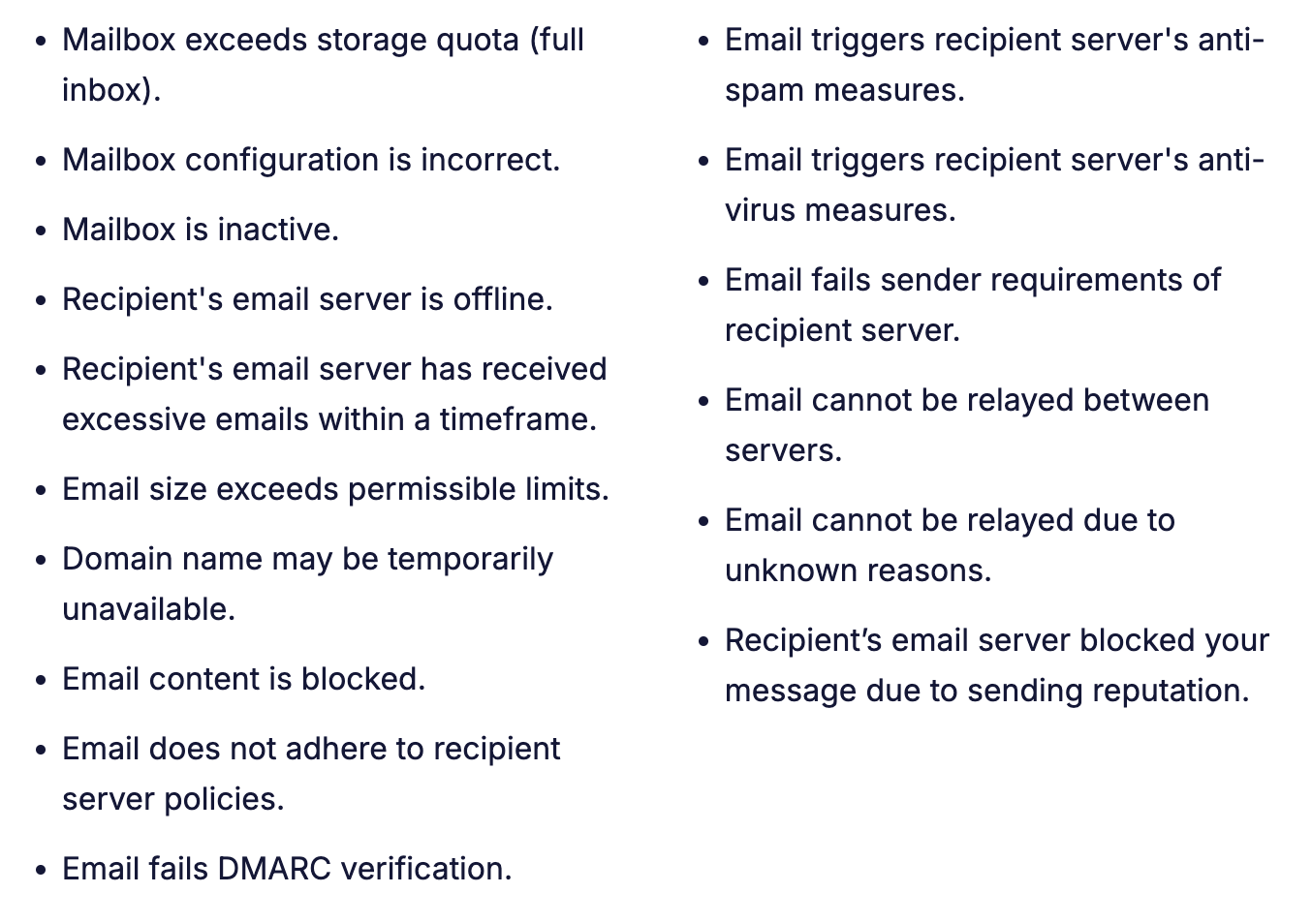
Four mechanisms account for most of the bounces that happen after a clean verification, and none of them are a failure of the original check:
- Accept-all (catch-all) domains: mail servers for these domains say yes to every address at the SMTP level, real or not, so a verifier can flag the domain as accept-all but can't confirm the specific mailbox exists behind it.
- Mailbox deletion after verification: an employee leaves, a domain migrates, or a free-mail account gets abandoned. Median job tenure for U.S. workers aged 25 to 34 is 3.2 years (U.S. Bureau of Labor Statistics), which is a steady, ongoing source of deactivated work-email hard bounces.
- Greylisting: some receiving servers temporarily reject an unfamiliar sending IP with a soft-bounce code, expecting a legitimate server to retry later. It's a spam-filtering tactic aimed at automated senders, not a sign the address is invalid, but it can look identical to a bounce if your ESP doesn't retry.
- Reputation-based blocking: Gmail, Yahoo, and Microsoft/Outlook increasingly filter based on the sending IP and domain history rather than the recipient address alone. A verified, genuinely active inbox can still reject your message if your sender reputation looks like a spam source.
Hard bounce vs. soft bounce
A hard bounce is permanent: the mailbox doesn't exist, the domain is dead, or the server rejected the message outright with a 5xx code. No retry fixes a hard bounce, and once you have one, the address belongs on a suppression list, not a retry queue.
A soft bounce is temporary: the inbox is full, the server is briefly unreachable, or the message hit a size limit. ESPs typically retry a soft bounce for 48 to 72 hours before giving up, and after 3 to 5 consecutive soft bounces on the same address, it should be promoted to a hard suppression rather than retried indefinitely.
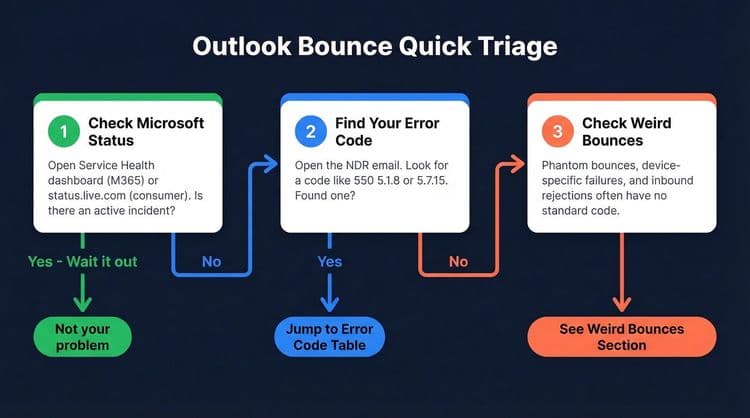
Provider-specific codes tell you which mailbox provider you're dealing with and why: a Gmail 550-5.7.26 usually points to an authentication mismatch, a Microsoft 550 5.7.606 flags a banned sending IP, and an Apple iCloud 554 5.7.1 signals a blocklist hit. None of those three codes mean the underlying address was fake, which is exactly why a bounced email needs a code check before you assume verification missed something.
What counts as a healthy bounce rate
Under 2% is the number every major source converges on. A rate above 2% signals a possible deliverability problem, and a post-verification rate under roughly 2% is considered realistic and healthy. Between 2% and 5% is a caution zone worth investigating, and anything above 5% is treated as a red-zone problem serious enough to risk ESP suspension, since common suspension thresholds sit around 2% to 3%.
Context changes what "normal" looks like. Global average bounce rates run closer to 10.4% (TrueList), and some verticals sit even higher (real estate averages 13.84%, per the same TrueList benchmark, largely from outdated contact lists), so the global average and a healthy rate are not the same number. Cleaner benchmark figures from Prospeo put hard bounces around 0.21% and soft bounces around 0.70% industry-wide, with combined rates closer to 0.93% for SaaS and B2B senders and 1.04% for architecture-sector senders, where job churn and disposable signups push the number up.
If more than 10% of your sends bounce, ISPs generally read that as a sign you're working from a purchased or scraped list rather than a hygiene problem, and they will throttle or block accordingly.

How often to re-verify your list
Re-verify monthly if you're an active bulk sender running regular campaigns, since frequent sends expose decay faster than an idle list would. If you send occasionally, every few months is enough to catch the accept-all flips, closed mailboxes, and reputation shifts that accumulate between sends. Add real-time verification at the point of signup, on a lead-generation form for example, so typos and dead domains never reach the list in the first place.
Hunter's own decay tracking, 2% of previously valid addresses invalid within four weeks, supports the tighter end of that range for active senders: a list left unchecked for a full quarter has likely accumulated well beyond that single four-week measurement. It's also worth running a re-engagement campaign against subscribers who've gone quiet for 6 to 12 months, since that inactivity is often the leading indicator that an address is about to become a bounce.
If a result comes back "unknown" instead of a clear pass or fail, treat it as unresolved rather than disqualifying. Re-checking that address 15 to 30 minutes later often resolves it, and a reputable verifier will refund the credit for an unknown result instead of charging you for a non-answer.
How to reduce bounces after verification
Verification narrows the field before you send. Keeping the bounce rate down after that takes ongoing list hygiene:
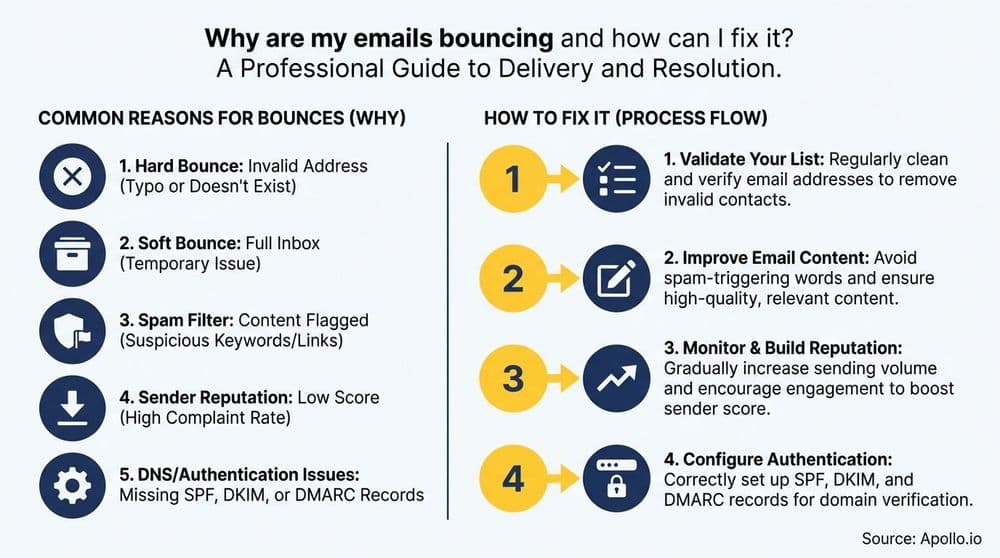
- Authenticate every sending domain with SPF, DKIM, and DMARC, since Gmail and Yahoo have required all three from bulk senders since February 2024, with Microsoft/Outlook following in May 2025. Without authentication, mail from a genuinely real inbox can still get filtered.
- Monitor deliverability with Google Postmaster Tools alongside whatever bounce reporting your ESP or platforms like Mailchimp and HubSpot already provide, so a reputation problem surfaces before your bounce rate does.
- Suppress hard bounces immediately and move repeat soft bounces to suppression after 3 to 5 consecutive failures on the same address.
- Re-verify before, not after, a send whenever a list has been sitting for more than a month, especially before mailing a purchased or aging list.
- Run re-engagement campaigns against contacts inactive for 6 to 12 months before removing them, since a still-live but disengaged address is often the one about to flip to a hard bounce.
- Watch your spam complaint rate alongside bounces: per current bulk-sender enforcement guidance, Gmail and Microsoft expect you to keep it under 0.3%, and a rising complaint rate erodes sender reputation the same way a rising bounce rate does.
A tool like BounceCheck runs real-time checks at signup and bulk verification against an existing list, so decay gets caught on a schedule instead of showing up as a bounce during a campaign.
FAQs
Why did a verified email address still bounce?
Verification confirms an address was valid at the moment you checked it, not that it will stay that way. Between the check and your send, the mailbox can be deleted, the domain can start greylisting your IP, or an accept-all server can accept mail for an address that was never real to begin with. A bounce afterward reflects decay, not a failed check.
Can a valid email address hard bounce?
Yes. A hard bounce means the receiving server permanently rejected the message, usually because the mailbox no longer exists, even though it existed and was reachable when you verified it. Employee turnover, account closures, and domain migrations all turn a once-valid address into a hard bounce without any error in the original verification.
What does a false positive in email verification mean?
A false positive happens when a verifier marks an address as valid, but the mailbox doesn't actually accept mail on send. It's most common with accept-all (catch-all) domains, where the receiving server says yes to every address at the SMTP level, so a verifier can't distinguish a real inbox from a nonexistent one at that domain.
How often should I re-verify my email list?
Active bulk senders should re-verify monthly, since regular campaigns expose decay faster than an idle list would. Occasional senders can re-verify every few months. Add real-time verification at signup for lead-generation forms so typos and dead domains never make it onto the list at all.
What is a healthy bounce rate?
Under 2% is the threshold most sources treat as healthy. Between 2% and 5% is a caution zone worth investigating, and anything above 5%, or above 10% specifically, risks ESP throttling or suspension because it starts to look like a purchased or scraped list rather than a hygiene problem.
Run your list through BounceCheck before your next send to catch decay before it turns into a bounce.
§ Before your next send
Find the addresses that will bounce
Verify a single address free, or upload a CSV — the free plan includes 50 checks a month, no card needed.